Graeme Thickins on Tech

Reflections & analysis about innovation, technology, startups, investing, healthcare, and more .... with a focus on Minnesota, Land of 10,000 Lakes. Blogging continuously since 2005.

The Unconventional Path That Took a Small Midwest Startup to a Multi-Billion-Dollar Fintech Success

Its founders met at MBA school, faced some scary challenges over the years, but kept their eye on the consumer. Now valued at $3.5B+ on the Nasdaq, Sezzle isn’t done yet embedding value into its app and platform.

(Note: This post first appeared on the blog of Great North Ventures.)

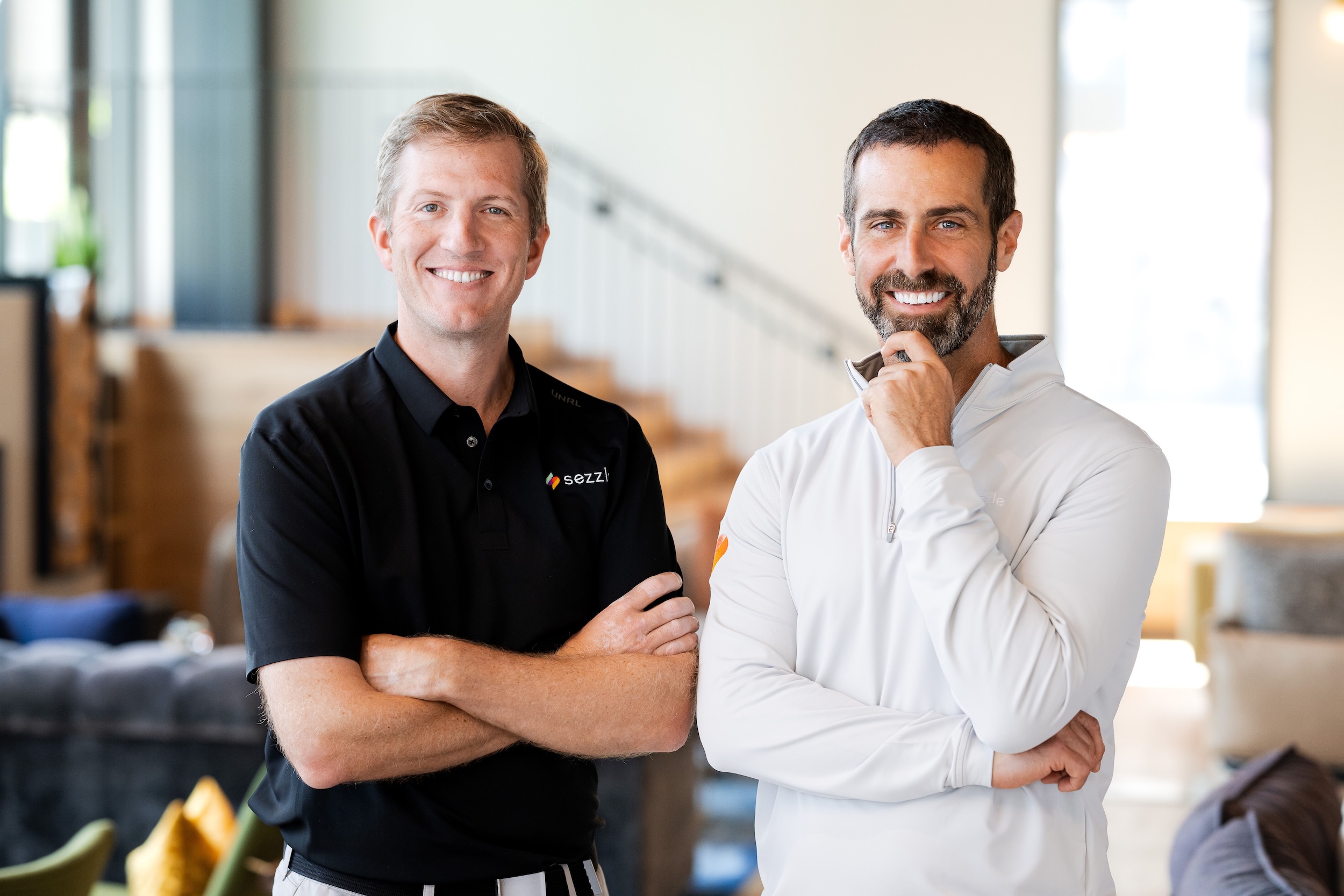
image of the two Sezzle cofounders

Paul Paradis (left) and Charlie Youakim, Sezzle cofounders.

I first met cofounders Charlie Youakim and Paul Paradis in 2016, just months after they had launched Sezzle. They were part of a pitch session I’d organized at a conference held at the University of Minnesota Carlson School of Management, the very place where they’d earned their MBA degrees six years earlier. Of the six early-stage Minnesota startups pitching that day, three went on to significant success, as I wrote recently. But none quite like Sezzle. The name, by the way, is a combination of “sell” and “sizzle” – and indeed they have.

This is a story about their journey over the ten years since, as related to me by Paul Paradis, Sezzle cofounder and president, with whom I had the pleasure of reconnecting at a founders dinner sponsored by Great North Ventures. Soon after, I arranged a sit-down with him to hear about many of the fascinating moments from the eventful journey of this super-successful startup.

“Sezzle in many ways is putting Minnesota’s fintech scene on the map,” said Rob Weber, managing partner of Great North Ventures. “And there are several more emerging embedded fintech startups focusing on a variety of markets that certainly can be inspired by their story.”

The Sezzle story begins with how Paul met and bonded with his cofounder, Charlie Youakim, the company’s CEO.

The Ping-Pong Partnership
Long before Sezzle became one of Minnesota’s most successful technology companies – and eventually a publicly traded Nasdaq fintech valued in the billions – its two cofounders were simply graduate students at Carlson trying to navigate one of the most chaotic economic periods in modern history.

Paradis and Youakim met at Carlson between 2008 and 2010, right in the middle of the financial crisis. Paradis recalls professors abandoning their planned curriculum to discuss the real-world collapse unfolding in front of them.

“All of our finance classes, the teacher would say, ‘Put your books away. We’re just going to talk about what’s going on right now,’” Paradis said. They had an education in finance they weren’t expecting when they signed up.

The two became close while working together in Carlson’s Consulting Enterprise program on a project for the Itasca Project, studying employment growth in the Twin Cities region. But it wasn’t just classroom collaboration that bonded them. “We became really good friends and ended up just becoming ping-pong obsessed,” Paradis said. “We would just play ping pong all the time together.”

Those early years also shaped their entrepreneurial instincts. Jobs were scarce. Internships had dried up. Traditional career paths suddenly looked fragile.

“I had the pleasure of working with and supporting Charlie and Paul as students. Both were highly engaged and did outstanding work,” said Phil Miller, now Assistant Dean at the Carlson School. “Their class really struggled with the depths of the financial crisis, but I suspect that helped them both in the long term. Paul was a motivated student, and we were able to connect him to a business development role post-graduation. Charlie was a driven founder from the beginning, passing up a traditional internship to work on the code base and business model for what became his first startup. Both of those journeys seem to have given them valuable experience on how they wanted their partnership in Sezzle to go. It’s been a joy to see them struggle through early challenges to the success they’re currently seeing.”

Youakim, a University of Minnesota engineering graduate and former software engineer, moved to Charlotte, North Carolina after business school and cofounded a parking technology startup called Passport. The company raised serious venture capital and grew quickly, but eventually Youakim and his cousin – his cofounder – had a falling out. He returned to Minnesota at the end of 2015 looking for a fresh start.

“He had a big chip on his shoulder,” Paradis said. “He wanted to show that he had something more in him.” Paradis, meanwhile, was growing restless in the consulting world. When Youakim called with the idea of building something new together, the timing was perfect.

The First Idea Failed Fast
The original version of Sezzle looked nothing like the company consumers know today. The founders initially believed they could reinvent ACH bank payments by authenticating bank accounts instantly, allowing merchants to avoid expensive credit card fees while still offering consumers cash-back rewards.

The concept attracted investors quickly. Thanks largely to Youakim’s reputation from Passport, Sezzle raised roughly $1.8 million in seed funding before launching its product – an unusually large pre-launch round for a Minnesota startup at the time. Investors included local angels, former Passport backers, a Belgian VC firm, and even a Chinese seed-stage investor.

But once the product launched in early 2017, the founders quickly realized they had a problem. “The small merchants didn’t care about saving 150 basis points on processing,” Paradis said. “They cared about growing their business. That’s number one, two, three, four, five.”

Consumer adoption was even worse. Even offering unsustainable cash-back incentives of 5% or 10% barely moved usage rates. After only two months in market, Youakim concluded the model was not working.

“He’s very good at that,” Paradis said of his cofounder’s willingness to take quick, decisive action. “In this case, it was a pivot, but more broadly, Charlie diagnoses a problem and immediately sets out to fix it. The rest of us were saying, ‘We raised all this money on this idea. It’s only been two months.’”

At the same time, Sezzle was pursuing a spot in the Techstars Target accelerator program in Minneapolis. The company reached the final interview stage – right as the team was internally debating whether to abandon its original business model. “We were literally debating whether to pitch the old idea or the new idea,” Paradis said.

They did not get selected. In hindsight, it may have been one of the best things that ever happened to the company.

Discovering Buy Now, Pay Later
As Sezzle searched for a new direction, Youakim noticed something interesting happening overseas. A fast-growing Australian startup called Afterpay was exploding in popularity with younger consumers. At the time, the “buy now, pay later” (BNPL) category barely existed in the United States. Another company, Affirm, focused only on large purchases like furniture and fitness equipment. But Afterpay had found something different: smaller installment payments that appealed to younger consumers wary of traditional credit cards.

Paradis and Youakim realized the U.S. market shared many of the same demographic trends as Australia, especially after the CARD Act of 2009 made it harder for young adults to get credit cards.

“We saw a bunch of Australian merchants promoting the hell out of Afterpay,” Paradis recalled. “And Charlie said Australia has always been a great test market for new tech because consumers behave very similarly to the U.S.”

The founders also discovered something critically important from regulators: if they structured the product as four payments or fewer, they could avoid many traditional lending regulations. “That’s when we said, okay,” Paradis said.

Their first sales strategy was surprisingly simple. “We started contacting all of Afterpay’s merchant customers that also sold in the U.S.,” Paradis said. “We basically pitched ourselves as ‘the Afterpay for the U.S.’”

It worked almost immediately. Merchant signups surged. And then Afterpay itself came calling.

“You Can Join Us or Compete Against Us”
Afterpay invited the Sezzle founders to San Francisco with a blunt proposition. “You can either join us or compete against us,” Paradis recalled. The Australian company offered what Paradis described as a lowball acquisition offer. Sezzle declined.

Within months, Afterpay officially entered the U.S. market with major retailers including Urban Outfitters and Revolve. Suddenly, Sezzle found itself in a brutal competitive battle against much larger, better-funded rivals.

The timing could hardly have been worse. Sezzle’s Series A financing nearly collapsed when a Chicago VC pulled its term sheet after Afterpay announced its U.S. expansion.

“That was a big blow,” Paradis said. The company needed a Plan B. Youakim provided it personally. He still owned a significant stake in Passport, his previous startup. When Passport investors offered to buy his shares during a new financing round, he sold all of his ownership and poured most of the proceeds into Sezzle. “He led the Series A himself,” Paradis said.

That decision would later become enormously important. Today, Youakim still owns a substantial portion of Sezzle, thanks partly to that personal investment during the company’s most vulnerable period.

Why Stay in Minnesota?
As Sezzle gained traction, the founders encountered another challenge familiar to many Midwest startups: coastal investors questioning why the company was based in Minneapolis.

“We’d go out to New York or San Francisco, and they’d all ask, ‘Why are you in Minneapolis?’” Paradis said. Some investors openly encouraged the company to relocate. Fundraising, especially for a fintech lender, proved much harder from Minnesota than it would have been in Silicon Valley or New York.

But Paradis says staying in Minnesota ultimately became one of Sezzle’s defining characteristics. “We were one of the only hot tech startups in town,” he said. “So if you wanted to work for a company like that, we had the buzz.”

The company recruited heavily from the University of Minnesota and Macalester College. Paradis also credits Youakim personally for choosing not to relocate the company.

“I have to give a lot of love to Charlie for that,” Paradis said. “I think he would have moved us, and he didn’t, primarily because of me. My family was here. Of course, his family was here, too, but he didn’t have kids yet. My second daughter was born the week I joined Sezzle full-time, and my wife worked for 3M. So I was much more tied down here than he was.”

The Australia Gamble
Despite improving traction, Sezzle still struggled to raise a strong Series B round in the U.S. Then an unexpected opportunity appeared. An Australian equity analyst visiting Minneapolis asked a simple question: Why not go public in Australia instead? That was a way to raise significant funds.

Australian investors already understood buy now, pay later because of Afterpay’s success. Better yet, Australia’s venture capital ecosystem was far less developed, making public listings more common for emerging tech companies. It was clearly an intriguing idea.

Youakim flew to Australia for a non-deal roadshow arranged by investment bank Ord Minnett. “He called me and said, ‘Paul, we’re doing it,’” Paradis recalled. “We were going to be able to raise a lot more money and at a much better valuation.”

The IPO process became a whirlwind. Paradis joined Youakim and Sezzle’s CFO for investor meetings across Sydney, Melbourne, and Hong Kong. At one point, after flying overnight to Hong Kong, the team showered in the airport before heading directly into all-day investor meetings in 100-degree heat and humidity. “It was incredible,” Paradis said. “We were actually planning to take a helicopter to Macau that night to celebrate, but Charlie fell asleep at the dinner table after we ate Peking Duck at the Mandarin Oriental. Still, it was a great ending to a great day.”

The company successfully listed on the Australian Securities Exchange (ASX) in July 2019.

The Crash
For a time, everything seemed to be working. Sezzle raised additional capital. The buy now, pay later market exploded globally. Affirm went public in the U.S., and markets soared during the pandemic-era fintech boom.

Then the cycle reversed – violently. Afterpay sold to Block for $39 billion in 2021, briefly fueling optimism that Sezzle might also achieve a major acquisition or Nasdaq listing. But by late 2021, fintech markets were collapsing.

Sezzle pursued both an IPO and acquisition discussions simultaneously. Nearly every potential acquirer backed away as markets cratered. Except one: Zip, a BNPL company based in Sydney.

The two companies publicly announced a merger. At the same time, Sezzle itself was under severe pressure. The company cut international expansion plans, terminated merchant partnerships, and laid off roughly a quarter of its staff. Its market capitalization collapsed from roughly $1.5 billion to just $40 million.

Nonetheless, Sezzle chose not to close the Zip deal. However, it produced a crucial lifeline: an $8 million breakup fee. Sezzle used that money to stabilize operations and race toward profitability instead of raising additional capital in a terrible market.

“We just slowly started digging ourselves out of the hole,” Paradis said.

Reinventing the Company Again
Sezzle’s eventual recovery required another strategic pivot. The merchant business had become hypercompetitive. Instead of relying solely on merchant integrations, the company shifted toward direct consumer relationships. Sezzle decided to focus on the subprime segment of the consumer market.

It launched subscription offerings, expanded its mobile app, and introduced products like Sezzle Anywhere and On Demand. The company also rebuilt carefully and efficiently.

Today, Sezzle employs roughly 500 people globally, including about 100 in the Twin Cities and approximately 250 in South America, particularly Bogotá, Colombia.

“We’ve found incredible talent there,” Paradis said. “Same time zone, highly educated, strong English skills – and much more efficient from a cost standpoint.”

Sezzle remains headquartered in downtown Minneapolis in the historic Dayton’s building, though like many tech companies it now operates largely remotely.

And despite Youakim now spending much of his time in Puerto Rico, a strategic location between Minneapolis and Bogotá, Paradis says Minnesota still matters deeply to the company’s identity. “He’s here every other week,” Paradis said. “His family’s here. Our roots are here.”

The company listed on the Nasdaq (Symbol: SEZL) in August 2023. It voluntarily delisted from the ASX, and its final day of trading on the Australian exchange was January 12, 2024.

Today, with Sezzle once again thriving, the company stands as one of the most remarkable startup success stories ever produced by Minnesota’s technology ecosystem – a decade-long journey shaped by pivots, near-collapse moments, international gambles, and an unusually stubborn commitment to building a major fintech company far from Silicon Valley.

A Strategy Well Executed
“Charlie and Paul’s ability to execute was very clear from the first time we met with them in January 2018,” said Rob Weber of Great North Ventures. “What was unclear in our initial meetings was how they were going to be able to compete against larger, more well-funded rivals Affirm, Afterpay, and Klarna. But their ability to adapt their strategy over time has been super impressive to watch.” He noted that it was Sezzle’s proprietary business intelligence system that enabled them to accomplish “far more with far less” than their rivals. “We benefited from that approach with our own startup, NativeX, before we became VCs. So we know what a difference it can make.”

Buy now, pay later (BNPL) in its earliest forms took roots through embedded partnerships across a wide range of merchant checkout processes. “It started off as a niche play, but is now emerging as core financial infrastructure,” said Weber, which he wrote about recently.

Recent Stellar Results
Sezzle reported a very strong Q1 2026 with 29.2% revenue growth, gross margins of 74%, net income of $51.3M, and adjusted EBITDA of $71.1M. Management raised full-year guidance, with revenue growth now expected to be 30%–35%, adjusted net income to $180M, and adjusted EPS to $5.10. Key drivers included improving credit performance, higher consumer engagement, and subscriber growth up 44k to 714k.

The company said product expansion is underway, including Pay-in-5, a virtual card in Canada, enhanced long-term lending, Sezzle Mobile on AT&T, and roadmap items such as deposit accounts and checking, positioning Sezzle to become an all-in-one services platform for value-focused consumers.

The company is embedding AI across support, product, and operations to increase efficiency and scale. And it is pursuing a bank charter, with an application targeted for this year, to improve regulatory defensibility and long-term economics.

“It’s going to be an exciting year for Sezzle,” said CEO Charlie Youakim on the earnings call. “2025 was about enhancing our current consumer ecosystem. We improved the app experience, expanded engagement features, leaned back into higher-value consumers, and continue to give our users more reasons to come back to Sezzle. But in 2026, we’re pushing that strategy further. We’re moving beyond being a product consumers think about only at checkout.”

He sums it up this way: “We’re building an all-in-one services platform for the value-focused consumer. The strategic goal is to make Sezzle more useful in more moments. The more value we provide, the more reasons consumers have to come back… We should see consumers using Sezzle more often across more merchants and across more use cases. That’s exactly what we saw in the first quarter.”

As the month of May 2026 came to an end, investment site Seeking Alpha named Sezzle the best performing financial stock of the month based on one month price performance percentage. In addition, that same week, another site published this article: Sezzle Tops the List of Best All-in-One Fintech Apps of 2026.

Learn more about this amazing fintech success story at Sezzle.com.


The Day Minnesota Became a Fintech Startup Hotbed

There was definitely some tension in the air, as six startups were about to pitch on stage. One of them had never even pitched in public before. Little did three of them know what this day would come to mean, and how their lives would change over the ensuing years.

Illustration depicting fintech applications around a banner saying "MN Fintech Pioneers"

The scene was an auditorium at the University of Minnesota’s Carlson Business School, at a “Financial & Retail Analytics” conference we called FARCON. It was almost ten years ago – August 2016, to be exact. I was hosting the pitch session. This little-remembered Startup Showcase, as we called it, quietly captured a pattern that would come to define Minnesota’s role in fintech and commerce innovation.

On that stage pitching were Sezzle, GrocerKey, and LiveGiveSave. A year later, at FARCON  2017 at the U’s McNamara Alumni Center, a Techstars cohort startup named Branch Messenger would pitch as well.

None of these companies was framed as “fintech” at the time. They were analytics companies. Retail companies. Behavior companies. But in hindsight, they were all working on the same underlying problem: how money moves through everyday consumer and workforce interactions.

Sezzle went on to pivot to buy now, pay later (BNPL). It did not invent it, but localized and operationalized it for a specific segment, aligning tightly with U.S. retail behavior and merchant needs. Branch, then a workforce communications platform, sat directly on top of shift work, payroll, shift cycles, and employee engagement – precisely the layer that would later enable earned wage access. LiveGiveSave, later rebranded as Spave, connected spending to saving and giving, anticipating today’s wave of embedded and values-driven financial tools. And GrocerKey built the infrastructure for local grocery e-commerce, an early signal of the digitization of everyday retail.

What ties these companies together is not category creation, but context. Each emerged from Minnesota’s unique intersection of large-scale retail, enterprise systems, and applied analytics. They didn’t start by trying to disrupt finance. They started by solving practical problems in online life and commerce – then extended into financial layers.

The outcomes were equally telling. Sezzle scaled into a publicly traded company, now with a whopping market capitalization of more than $2B (Nasdaq: SEZL). Branch evolved into a leading earned-wage access platform, growing rapidly and now partnered with Stripe. GrocerKey (which was based in Madison WI with Minnesota operations) exited to a strategic buyer, a success for the founding team. And Spave followed a less conventional path: a meaningful exit followed by the founder buying back the name and rights to certain markets to continue building the platform and operating the company independently.

Together, as we look back today, it’s quite clear these four companies can stand proudly as early Minnesota fintech pioneers. Big kudos to them!

We can be sure, however, that much more fintech innovation is yet to come in our state. Stay tuned!

The Coming $1-Trillion Space Economy, and How Minnesota Plays Into It

Our state may not launch rockets, but it quietly builds the technologies that make the growing space economy possible.

Minnesota actually has a surprisingly deep set of companies connected to the space industry. Many state firms provide materials, electronics, engineering services, sensors, and manufacturing that go into spacecraft, satellites, and launch systems used by organizations such as NASA, SpaceX, Boeing, and Lockheed Martin.

Several notable Minnesota companies are directly or indirectly participating in the space economy. Here are just some of the state’s companies with space industry connections

1. ION Corporation (Eden Prairie) – Aerospace engineering and testing company doing direct NASA mission work.
2. Stratasys (Eden Prairie – Nasdaq: SSYS) – 3D printing is increasingly used for rocket engines, brackets, and satellite components.
3. QuesTek Innovations (has a facility in Waconia) – Advanced alloys and materials for rocket engines and extreme thermal environments.
4. Collins Aerospace (Burnsville) – Part of Raytheon Technologies. Collins systems are used in satellites, spacecraft navigation, and communications payloads.
5. Northrop Grumman (facility in Plymouth) – Global aerospace contractor. Minnesota operations contribute to electronics, engineering, and mission systems.
6. BAE Systems (Minneapolis) – Builds radiation-hardened electronics, sensors, and spacecraft avionics used in many satellite systems.
7. Chandler Industries (Minneapolis) – Supplies high-precision components used in spacecraft assemblies and aerospace hardware.
8. EarthDaily Analytics (U.S. operations in Maple Grove) – Uses satellite data and space-based imaging analytics for agriculture and climate intelligence, an important part of the satellite data economy.
9. Timmaron Group (Minneapolis and Silicon Valley) – Was a solution architect in the development of Starlink’s satellite system.

An Emerging Space Infrastructure Project

The Minnesota Aerospace Complex in Rosemount is a planned $1+ billion hypersonic testing and aerospace facility. Potential uses will be testing hypersonic vehicles, spacecraft reentry materials, and advanced propulsion systems. If completed, it could become one of the largest aerospace testing facilities in the U.S. (More here.)

Three Main Sectors

These Minnesota sectors feed the space industry:
• Advanced manufacturing: Minnesota has strong precision machining and electronics supply chains used by aerospace primes.
• Robotics & autonomy: Companies building robotics and AI systems for inspection, drones, and autonomous vehicles may transition to space applications.
• Satellite analytics & AI: Minnesota’s agtech and geospatial analytics firms increasingly rely on satellite data.

Little-Known Companies, But Some Big Ones, Too

Minnesota doesn’t yet have a large cluster of rocket startups, but it does have a quiet ecosystem of organizations connected to the space economy — often through satellites, materials science, robotics, geospatial data, and advanced manufacturing. Think the supply chain of space.

In geospatial and satellite data, consider Descartes Labs. It was founded in New Mexico but maintains a significant Minneapolis engineering presence. (Note: In 2024, Descartes Labs was acquired by EarthDaily Analytics, which has operations in Maple Grove.) It uses satellite imagery and AI to analyze agriculture, climate, and geopolitics. Its customers include U.S. government agencies and global enterprises. It works with data from NASA, ESA, and commercial satellite constellations. Satellite data analytics is one of the fastest-growing segments of the space economy.

In the category of robotics, sensors, and autonomy, don’t forget about a major tech firm like Seagate Technology (Nasdaq: STX) with its work in advanced data storage R&D. Storage systems are used in satellite ground systems and data infrastructure. Its technology supports satellite data processing pipelines.

Another publicly traded firm is SkyWater Technology (Nasdaq: SKYT), a Bloomington-based semiconductor foundry. It produces radiation-tolerant chips and advanced microelectronics. Radiation-tolerant semiconductors are essential for satellites and deep-space missions.

Why Minnesota Could Become a Space Supply-Chain Hub

Thus, Minnesota has many ingredients needed for space-industry infrastructure. Again, these are our main strengths: 1) advanced manufacturing – including precision machining and aerospace components, 2) materials science – extreme-environment materials and additive manufacturing, 3) semiconductors – specifically radiation-hardened electronics, and 4) AI and geospatial analytics – which is turning satellite data into usable insights.

A Trillion-Dollar Industry On the Verge of Breaking Out

For a further perspective in the space industry, and how 2026 could be the year things really take off (pun intended). see this recent blog post from my client Timmaron Group. (SpaceX IPO, anyone?)

And this recent WSJ article will provide some further perspective: The Space Economy Is Mission-Critical. Here’s What Leaders Need to Know.

——

Postscript: The list of Minnesota companies above is not intended to be all-inclusive. Know of another company doing space-related work here in our state? If so, tell me in the comments.


A Fascinating Saga Continues: AI Disrupting Enterprise Software

This past week was another brutal one for software companies, as evidenced by the big stock declines you see here (as of market close on Feb 7). This week may have been better for some than the week before, but not by much. Some observers are starting to refer to what’s happening as the “SaaS apocalypse.” Fox Business called it a “$1 trillion rout in U.S. software giants” and labeled it “the software Armageddon.”

Just what exactly happened this first week of February to cause the latest shock to the industry? A single move by an AI company juggernaut. As Fast Company put it, one Anthropic update wiped billions off software stocks. It begins: “Investors fear Claude Cowork’s new agentic features threaten entire categories of SaaS tools.” The article continues:

“Tech workers have been worried for years about the AI tidal wave coming for their jobs, but their bosses are starting to worry now, too.

“Stocks plunged this week as fears escalated that AI advancements will take a bite out of business for many software, data, and professional services companies. The market losses are tied to updates to Anthropic’s AI-powered workplace productivity suite, Claude Cowork, which threatens to replace some software tools ubiquitous in the professional world.”

But despite many in the tech world piling on to the prevailing opinion that enterprise software is dead, there are a few voices speaking out with a viewpoint that all is not lost for the software industry. One example is cited in the closing paragraph of the above Fast Company article:

“Not everyone deeply invested in AI agrees. Nvidia CEO Jensen Huang swatted away worries that AI would eat the traditional software industry after the stock bloodbath that began on Tuesday. ‘There’s this notion that the tool in the software industry is in decline, and will be replaced by AI,’ Huang said, emphasizing that relying on existing software tools makes more sense than reinventing the wheel. ‘It is the most illogical thing in the world, and time will prove itself.’ ”

Another skeptic is Steven Sinofsky, a former Microsoft exec who’s a board partner at Andreessen Horowitz (a16z). Here’s a (long) opinion piece he published this week: Death of Software. Nah. Additionally, an article in The Economist argued a bit against the prevailing dire view: Why software stocks are getting pummelled. Are investors overestimating the risk from AI? (May require a free subscription.)

And the Fox Business article cited above ends with this note: “Despite the stock market turbulence this week, the Dow Jones managed to cross the historic 50,000 level, underscoring the continued exuberance surrounding the AI race.”

For a fascinating, deep-dive analysis of the situation, Ignite Insights published this (very long) post on its Substack just days ago: The Great SaaS Unbundling. Where Software Value Actually Goes When Agents Arrive. (May require subscription.)

(Note: This post first appeared on the blog of my client Timmaron Group.)

From Bootstrapping a $70M Company to Leading a VC Fund: Lessons for Founders

Twin brothers Rob and Ryan Weber, founding partners of Great North Ventures, have raised two funds and invested in more than 50 startups to date and counting, throughout the Midwest and the rest of the county. Well before that success, however, they were founders themselves of their own ventures, beginning in their 20s, and they learned a lot the hard way in their life as “operators,” a label they proudly wear. From that experience, it’s no surprise they have actionable advice for entrepreneurs in today’s world of AI and fintech. I recently interviewed Rob and Ryan to hear some of the stories they willingly share as hard lessons for founders launching startups today.

We begin with a story from their early bootstrapping days with their startup, Freeze.com , which they founded in Minnesota in the late 1990s. “We raised an angel round of $320,000 in the spring of 2000, just before the dot-com bubble popped,” said Rob. “We were generating around $50k a month in free cashflow from advertising revenue from our prior dot-com publishing business, so we didn’t really feel we needed the cash from the angel round. However, we were excited to bring on a couple of those angel investors as board members to provide us mentorship and guidance.”

In the year after this angel round, Rob and Ryan hired their first dozen employees and were on the verge of launching their core optimization back-end system, which they had been incubating. “Meanwhile, our monthly cashflow began to decline very quickly,” said Rob, “as the majority of our ad revenues came from dot-com startups that had run out of funding. We were down to less than $100,000 in the bank and were losing money every month.”

That led to a particularly mentally difficult period, Rob said. “I remember one week I couldn’t force myself to walk up the stairs to our office, and the anxiety was causing a serious lack of sleep. Luckily, I got help and worked through this very difficult time.” AI illustration depicting Rob Weber dreading to go upstairs to the office

Rob and Ryan’s board – a benefit of that angel round – advised them to reduce their operating costs and conserve cash to weather the storm. “At age 21, my brother and I had to let go a third of those first employees. It was first time we’d ever had to experience a layoff. It was hard.” However, the pair managed to launch their back-end system, and pretty quickly start to generate significantly more free cashflow with the help of their remaining team.

They were definitely back on track. “By 2005, we had scaled to $30 million in annual revenue and $5 million in EBITDA,” said Rob. I asked him what were the hard lessons he and his brother took away from that very difficult early period.

“Number one, raise cash when you don’t know if you need it,” he said. “It will be easier to do and you never know what the future will bring to your business. And, two, remember your business doesn’t define who you are. Founders sometimes lose track of this because they commit so much energy to their business.”

Because Rob and Ryan have lived the founder’s journey literally from a cold start (pun intended), and now evaluate founders for a living, they have more valuable lessons they can share to help today’s founders. The ones from the early days are especially instructive, as founders who bootstrap successfully for survival often are the ones that VCs find the most promising to fund.

Profitability Isn’t Optional, and Metrics Are Critical

Moving from survival to profitability was a journey the brothers obviously conquered. “When we were just starting out, we had pretty good aggregate metrics for our web traffic, such as how much traffic we were getting each day, from which search terms, and so forth,” said Rob. “But we had no idea how the traffic was converting and contributing to our revenue generation.” Once he and Ryan launched their optimization system, they had much better granularity as to how traffic was converting. “That allowed us to run experiments and optimize for efficiency,” said Rob. “The vast majority of our competitors had no such optimization system, so our revenue and free cashflow started to soar.”

This focus on metrics remains essential for startups today, the brothers point out. “Most lack granular KPI measurement for their businesses, which causes them to make decisions based on intuition alone,” said Ryan. “And that does not scale well.”

There’s a problem with the “growth-at-all-costs” mindset of many venture-backed companies, Rob points out. “Such heavily funded companies can get by with a poorer understanding of the KPIs that drive their business. Even though they operate inefficiently, they can continue to afford to burn lots of cash.” The key takeaway here is that founders mustbuild a fundamentally sound business first, Rob maintains. “Capital should amplify a great business, not create a temporary one.”

The Unfair Advantage of Technical DNA

Both Rob and Ryan studied computer science in college. They didn’t do coding or design work themselves once they launched their startup, “but we were very active and curious about how our team was developing our core systems,” said Rob, “and very involved in product design decisions.”

Ryan added: “Our background studying math and computer science caused us to take a pragmatic, analytical approach to decision making. I also think our technical background made us more relatable across our team. We always placed a high degree of value on technical roles, whereas some companies overvalue sales, for example.”

How involved were Rob and Ryan with their team? “We were very much ‘in the trenches’ understanding how our business was growing,” said Rob. “We were able to make effective decisions quickly. What changed over time as we scaled our business was the need to build a team that was also very entrenched in the technology aspects of our business, and to empower them to make decisions.”

The key lesson here for founders, both brothers agree, is that a deep understanding of your technology, product, and market is your most defensible asset. And having a team that also gets that is mandatory.

Scaling with Scarcity Breeds Creativity

Can a lack of resources help drive a founder to seek his or her own solutions? “We didn’t have a large enough engineering team to automate everything, so we would do a lot of tasks ad hoc,” said Rob. “One example was how we scheduled email campaigns to our opt-in email list. Because that list had grown into the millions, we couldn’t schedule one big email campaign because it would crash our email server. So, instead, for about a year in the early days, I had to break up email campaigns into a series of smaller campaigns and set an alarm to remember to check on them and start up new campaigns. This created a lot of interruption in my personal life – which basically didn’t exist! Eventually, we developed better email scheduling tools, but you do what it takes to grow – and we did.”

The brothers ran their startup – by this time named W3i, and later NativeX – with an intense focus on capital efficiency and a culture of ownership. “When others on the team see how you’re willing to accept certain hardships or personal sacrifices in growing your business,” Ryan noted, “it makes them more willing to take that on themselves. Our early team very much all had this founder mindset.”

The lesson for founders is this: Constraints can actually be a good thing. They force you to build a lean, resilient, and resourceful team.

Looking Through the Investor’s Lens: The Great North Ventures Thesis

When the Weber brothers look at a pitch now, they admit they must see past the flashy growth numbers to the underlying unit economics. “In nearly every first call,” said Rob, “I ask how much capital has been invested into the business to get to where they are now. It isn’t so much how much revenue they’re generating relative to what they’ve burned, but, rather, how much have they really accomplished with the capital that’s been invested?”

With their experience, they ask themselves: Is this a real business, or just a story the entrepreneur seeks to fuel with capital? “I once invested a small angel check into a startup that raised a Seed round pre-launch. I remember the startup burned through all the Seed capital and ultimately never even launched their product. This stuck with me. There are many ‘founders’ out there that, even if they were able to successfully raise a Seed round, still would not be able to organize a team to deliver a well-crafted product that solves a real problem.”

What smart investors like the Webers look for are founders who are obsessed with their business model and their unit economics, not just the funding they seek.

“A really good example of what we call ‘Seed-strapping’,” said Rob, “is our portfolio company WithMe, which began in Chicago, whose founder proudly admits he raised the least amount of capital necessary.”

Investing in Founder-Market Fit

How does Great North Ventures evaluate founding teams today? “I’m looking for founders who have uncovered a market tailwind that is being underutilized and, as such, have created the opportunity to solve a problem in a new way that wasn’t possible before,” said Rob. “Often, this is through the unleashing of an emerging technology where incumbents are slow to adopt.”

Rob goes on: “When Ryan and I were teenagers, in the mid-to-late ‘90s, Internet usage was exploding and, although there were many people in the world experimenting with web publishing, there was a huge imbalance. That is, the opportunity created by the rapid, widespread adoption of the Internet was far greater than the number of web publishers putting up new websites.”

Ryan adds: “Ideally, the founders we look at have been tinkering with whatever technology they plan to unleash so they have mastered the skills required to properly harness it within their business.”

Essentially, the Weber brothers back founders who have a unique, almost unfair, insight into the problem they’re solving. It’s the “Why you?” question.

“Typically, I see the unique insight coming from one of two areas: technology-driven or market-driven,” said Rob. “Founders who have mastered a new technology can often deploy their skills into any number of vertical markets, which can provide them an advantage over incumbents. Think back to the late ‘90s: no one at giant Walmart was going to take on Jeff Bezos when it came to pioneering in e-commerce, despite Bezos having no retail background. Market-driven insights can be very powerful, too, especially in more complex industries where problems are super obvious outside of the industry. When founders have a more market-driven insight but lack technical skills, that’s okay. But we strongly prefer they have a cofounder or early team member who has strong technical skills to complement them.”

Net-net, the brothers look for evidence that the founders are the only people in the world who can build this specific company.

Investing in Capital Efficiency

It’s helpful to look at how the Weber brothers view a startup’s request for capital. Just a number means little – it’s the strategic plan that matters.

“I’ve often seen that, even when startups are competing in the same market, how they deploy capital is frequently more important than the total capital raised,” said Rob. “I’ll give one example from our portfolio. We have a startup in our portfolio called Inhabitr, which was also originally founded in Chicago (but now in California). It provides an AI-powered platform for B2B furniture procurement. Around the time we led their Seed round, a handful of other competitors raised much larger early funding rounds. While Inhabitr invested in its core AI capabilities and chose to partner with others in the furniture retail space, their competitors invested heavy amounts of capital into developing their own inventory and warehouses. Over time, most of Inhabitr’s competitors significantly underperformed because of this poor deployment of capital.”

The Webers’ bootstrapping background gives then a keen eye for founders who will treat every dollar of investment with the same care they’d treat their own last dollar.

Thus, they look fora clear, credible plan for how their fund’s capital becomes a force multiplier for the founders’ existing resourcefulness.

“One thing we often see,” said Ryan, “is startups burning large amounts of capital to fund their unproven go-to-market strategy. A better approach is to deploy small amounts of capital in the early going to develop expertise in one, scalable market channel. Once they’ve mastered that channel, that’s the time to plow capital into it.”

Conclusion: The Best Founders Think Like Investors

The Webers believe, whether you’re bootstrapping or raising millions, the goal is the same: build a durable, valuable company. They know the best founders are always thinking about the long-term health and defensibility of their business.

What final piece of encouragement would Rob and Ryan add? They jointly advise: “Cultivate an unwavering focus on your customers and the problem you’re solving, and let that guide you in key decisions. The investment you make into systems that allow you to understand your customers at the most granular level will likely be your most profitable investment.”

If you’re a founder building with this mindset, and you’re a fit for Great North Ventures’ investment strategy, Rob and Ryan want to hear from you.

To learn more about Rob and Ryan Weber’s background, check out my prior post here.

———-

Note: This post first appeared on the Great North Ventures website, with my byline, and here’s my bio that appeared with it:

Graeme Thickins is a startup advisor and an investor in Great North Ventures Fund I. He is also an angel investor in two subsequent Great North portfolio companies. He has written previously for and about Great North Ventures and its founders over several years.


« Older posts