Reflections & analysis about innovation, technology, startups, investing, healthcare, and more .... with a focus on Minnesota, Land of 10,000 Lakes. Blogging continuously since 2005.

Category: Innovation (Page 43 of 77)

Biggest Macworld Ever, But More Sedate?

The lines were blocks long around Moscone West early this morning, and that was just people wanting to get their badges.  The real stuff doesn’t even start till tomorrow morning — the Steve Jobs keynote and the opening of the exhibitor floors. Somethingintheair

From the Starbucks a block away, and now from the media lounge, the best stuff I’ve seen online so far:
• Troy Wolverton’s piece in the Merc News comparing to last year’s event, Macworld: Always cool, but calmer?

• A UK site that reported Job’s keynote speech outline has been spied on the web, which was repeated by another site here: Steve Jobs Macworld 2008 Keynote Speech Leaked on Wikipedia. True?  Who knows. (Any Apple employee discovered leaking anything gets summarily fired and forfeits every penny of their financial benefits, based on the contract they sign when they accept employment.)
• Macapper ran this Pre-Show Link Orgy post.
• Mainstream blog Techcrunch reported earlier today about Google Beefing Up the iPhone Interface.
• And I discovered I only need to carry my iPhone to navigate the Macworld showfloor, thanks to this little iPhone app. Great, cuz this laptop bag is already getting heavy….

More soon.

DEMO ’08 Is Coming – And I’m Pumped

Fellow innovation junkies, your day is fast approaching: it’s almost DEMO time again, and I can’t wait!  You’ve heard me say before that this is simply the best tech conference there is, which is why I cover every single one of them. Demo08reignite
The anticipation for this event is like no other, not to speak of the surprises — with up to 70 new companies or products launching at each of the twice yearly conferences. This is where you see the new stuff. How does 2,380 company launches over 17 years of experience sound?  It’s an amazing record. Through it all, as the DEMO folks say, their focus "remains on one thing: the future." Read more on the DEMO About page.

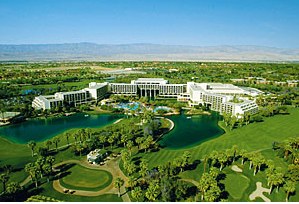
Jwmarriott1So, yes, January 28-30, I’ll be in Palm Desert, CA, attending the DEMO ’08 conference as a member of the press corps again. And, as part of this prestigious group, I’ve been given the opportunity to offer Tech~Surf~Blog readers a special discount to attend.
You can get more than $600 off if you register through this special, whiz-bang link. Demo07poolsceneClick here for more DEMO information and conference details, and here’s a great FAQ page, too. (Just be aware that this discount cannot be combined with other offers or promotions, or applied to registrations that have already been processed.) 
I really hope you can make it, because I love to meet my readers in person!  And I know you will find it a valuable experience.Jwmarriott2_2

The thing about DEMO is that it’s so much fun, too. Here are some of the events. There’s nothing that beats partyin’ with your fellow innovation junkies (between blog posts, of course).

And the venue?  Oh, baby, this place is awesome: the JW Marriott Desert Springs Resort, as you can see from a few pix I’ve included here. Click here as well for more about the hotel and travel details.

Here’s how the DEMO folks recently talked about their record over the years in picking winners. They do have an uncanny ability to uncover new trends:

"DEMO was there when the seeds of Web 2.0 were planted… exploring some
of the first Web services before we even had buzz words to describe
them. We have stayed true to our mission: to find great innovation
wherever it occurs, identify market trends through the lens of the
products coming to market, and expose you to new ideas and
opportunities.

"DEMO does not follow trends – we invent them.
Never has this been more apparent when the NBC Today Show segment on
January 1st featured Top Tech Trends for 2008 and highlighted two DEMO
Alumni who launched at previous DEMO events – Ugobe and Dash. It was
great to see companies making an impact on the market with technologies
identified by DEMO two years earlier."

Want to read some more good stuff about their predictions and trends for 2008?  The DEMOblog is a great resource, written by the show’s executive producer, Chris Shipley, and edited by Keith Shaw. It’s one of the best kept secrets out there in blog-land, and is actually an online version of the venerable DEMOletter.

So, net-net — you really want to know what’s coming?  Attend DEMO — simple as that.  See you there if you can make it!  And watch for my next post on the event, which will include a listing and links to all the presenting companies, just as soon as they’re announced to us press folk (the weekend before).

New Face of Venture Investing: the ‘Small’ Guys

The world of venture investing has changed….in case you haven’t noticed. Yes indeed, "small" is very much in — as in smaller investments — especially for startups having anything to do with the Internet. [And that would include most everything to do with IT and software today, not to speak of consumer services.]  The reason is simply that startups don’t require as much capital in this age of…whatever you want to call it: "Web 2.0" or "the Internet as platform."

A great article in Saturday’s Wall Street Journal drove that point home again: VC’s New Math: Does Less = More?  The main subject of the article was Peter Thiel, the former CEO of PayPal, who now runs a small VC firm that’s become the talk of the Valley.  It invests "sometimes just a few hundred thousand dollars" in its deals, says the article, which also quotes him as saying that the venture-capital world "definitely needs to be shaken up." Thiel and his fellow founders and execs from his PayPal days have built quite a record of investing, including an early stake in Facebook. Last year, the NY Times also published an excellent article about Thiel and his "mafia": It Pays to Have Pals in Silicon Valley.

Newfaceofvc_2

But Peter Thiel and his gang are hardly the only ones leveraging this new model. I present here six more that have it figured out pretty well, too, with most already reaping rewards, as firms they have backed have either been acquired or achieved big paper valuations. [There are surely other "new VCs" I could feature here, but these six are the ones I know best, from reading and commenting on their blogs, hearing them speak at conferences, or actually meeting some of them in person.] Note that most of these guys began by investing their own money as angels, which they gained from successful careers as tech entrepreneurs or traditional VCs, but all those that did start that way have morphed into the new breed VC, because they’re now investing other people’s money as well. That is, they’ve raised traditional VC funds, but tend to focus those funds on smaller, Internet/Web 2.0 type investments. (Thiel’s new career even goes beyond this, however, as he also manages a hedge fund, as noted in the Journal article.)

Breeding Winners
Who are the others pictured above? Josh Kopelman of First Round Capital is based in the most unlikely of places, suburban Philadelphia, but calls himself the "Redeye VC" (which is the name of his blog) because he’s flying to the Valley so often. His entrepreneurial background includes Half.com, which was acquired by Ebay. Josh was the subject of a feature just published by Fortune on people to keep an eye on in 2008, as the traditional media continues to discover these guys we know, because it’s realizing how much wealth they’re helping create behind the scenes. Josh’s portfolio will impress you.

Fred Wilson is the reigning godfather of Web 2.0 investors from his perch in NYC at Union Square Ventures. And that’s largely on the strength of his blogging — he blogs on his firm’s site, and at his personal blog, AVC. Check out his firm’s portfolio of Internet investments. Fred is hands-down the most prolific of the VC bloggers (with more readers than only Guy Kawasaki). I actually don’t know how he has time for much else with all the blogging and Twittering he does. (He’s an investor in Twitter.) But then, he’ll tell you he actually learns about many of his deals through his blogging. He considers it an unfair advantage, and has caused many other VCs to catch on to the benefits of writing in the blogosphere. For more on Fred, who’s actually a pretty private and low-profile guy (for example, he doesn’t show up at too many conferences), see this profile that appeared on a Wired blog earlier this year. 

Jeff Clavier is one of only two of this group based in the Valley — Palo Alto in this case. [Note that two of the others are in SF, but three are elsewhere.] Jeff has an extremely interesting and eclectic background, starting in France, where he did an IT startup, acquired by Reuters, where he later served as a corporate VC. There, he managed early investments in such firms as Yahoo! and Verisign. He later migrated to the Valley and become one of the early investors in Web 2.0. His blog, Software Only, was an early and influential voice in this new world of venture capital. Just a few months ago, Jeff announced on his blog his new $12 million seed fund.

Brad Feld is based in Boulder, CO, and is one of five partners in The Foundry Group. He’s a prolific blogger, at both Feld Thoughts and Ask the VC. The latter is one of the best resources I know of for enterpreneurs seeking advice online. Brad is an amazing, high energy guy. A marathoner and an inveterate entrepreneur with a masters from MIT, he’s lived the entrepreneur’s life as founder of a
software firm that was acquired by AmeriData Technologies (later acquired by GE Capital), where he served as CTO. Brad was a driving force behind the launch this past summer of the TechStars competition in Boulder, and his firm has already funded some of the winners.

Dave Hornik is a very well known member of this new breed of VC, for two reasons — he was an early player, and he’s based in the Valley. His firm, from its cool digs on Sand Hill Road in Menlo Park, invests in more than just Internet services, however. Some of the names you would know in its Internet portfolio are Six Apart, Technorati, Evite (acquired), Shopping.com/Epinions (acquired), Postini (acquired), and Tumbleweed. Dave’s VentureBlog was one of the earliest VC blogs, which certainly contributed to his popularity, though he’s posting much less frequently there of late.

Aydin Senkut, by contrast, is probably the newest and least known of the group. An early Google manager, he left in 2005 and now runs Felicis Ventures in SF. You say you’ve never heard of it?  Well, check out his portfolio. He was one of the subjects of a NY Times article a few days ago entitled A Post-Google Fraternity of Investors. While the ex-Googlers now investing in startups (most as angels, some as VCs) are not as tight-knit a group as the ex-PayPal founders and execs, there are potentially many more of them.

What do you think of this new breed of venture investor?  Are they really changing the game, or are they simply more of the same-old Vulture Capitalists, just dressed in tee-shirts and jeans?  🙂  And, how early do you think entrepreneurs with new ideas should approach these guys?  Will you?

UPDATE (1/7/08): For more on this trend in venture capital, no one says it better than Chris Shipley, Executive Producer of the DEMO Conferences. Check this out, from a series of recent DEMOblog posts on 2008 predictions: Venture Capital Feels a Pinch[And, by the way, look for me at DEMO ’08 in Palm Desert, CA, January 28-30.]

It Was Another Great ‘Minnedemo’ on Thursday Night

On a brisk Minnesota evening in early December, what better to do than get together to drink beer and watch demos with 200+ of your closest tech friends and talk code, startups, business models, and all that good stuff?
Minnedemo1207crowd Thursday night, the scene for Minnedemo again was O’Gara’s Garage in St.Paul, and the joint was a-jumpin’! We didn’t need a band — we were all our own entertainment!
Minnedemo1207ogaras

Thanks to our sponsors, we not only got two free beers (or sodas) each, but we also could trade canned food donations for even more beer tickets, so we could then play big shot and buy beer for our friends. Trading canned food for beer….does_it_get_any_better_’n_that? It was a hoot….lots of great conversation and new friends made. You have to be at one of these things to really appreciate the energy of the Minnesota tech community! If you haven’t caught one yet, make sure you get to the next one in April (date to be announced). Hey, it’s FREE — whadya want?!? 🙂 That one will be the full-day-Saturday version we call “Minnebar.” It all part of Minnesota’s answer to the worldwide phenomenon called Barcamp — and we are definitely one of the most active locales outside the Valley.

Here’s a rundown on Thursday night’s great presenters, including some detail about the very cool new products they were demoing:

Ntractive LLC (Dale Jensen, Cofounder/CEO) – This startup, based in Grand Forks, is a winner of the “InnovateND” award, and is receiving its first-round funding from St. Paul-based RAIN Source Capital. Ntractive has developed a “hybrid” app for small business management called “Elements SBM.” This app, initially for the MacOS, provides web application flexibility with unprecedented ease of use not generally found outside of the traditional desktop application. The result is a visually elegant and technically innovative solution that allows small business users to quickly become more productive. Minnedemo1207dalejensen The company officially launches at MacWorld in San Francisco in mid-January, but chose Minnedemo (yay!) as the venue its first public demonstration. Till now, small businesses had to choose a desktop app or a web app, but, said Jensen, “With our hybrid app, we’ve made it possible for the first time to really have the best of both of those worlds.”

Zencoder Video Transcoding System (Jon Dahl, cofounder of Slantwise Design) – Zencoder provides “bulletproof video transcoding.” Minnedemo1207jondahl It’s described as a full-featured video transcoding platform that handles every aspect of video processing, from queuing to transcoding to storage. Video transcoding systems are complex and difficult to get right, Dahl said. Zencoder claims its platform is reliable and scalable, costs far less than a custom-built solution, and yet is highly customizable. To be notified when it’s released, enter your email address at the site.

Valtira (Morgan Catlin, Product Director) – The Valtira Online Marketing Platform is a complete online solution for marketing professionals. It’s “software as a service” — all you need is a web browser. Valtira manages the IT infrastructure, operations, and upgrades from its Tier 1 data center. The platform empowers the marketing team to manage online initiatives without the need for IT support. Components include Content Management, Campaign Management, Blogging and Forums, Prospect Management, Email Marketing, Sales Portals, Social Networking, Online Surveys, Real-time Analytics, and Support & Training. Valtira just announced a new, free campaign tracking solution that lets you track up to 15 marketing campaigns.

JRuby (Charles Nutter) – JRuby is a 100% pure-Java implementation of the Ruby programming language. The JRuby community recently announced the release of JRuby 1.1 beta 1, the first release toward their goal of JRuby 1.1. JRuby 1.1 represents a concerted focus on speed and refinement. Ruby code can completely compile in an Ahead Of Time (AOT) or Just In Time (JIT) mode, yielding a faster Ruby! It uses less memory than previous releases. The community wants people to download JRuby 1.1b1 and provide feedback: “test your applications and help us make JRuby 1.1 a great release.”

Grapheety (Gavin Quinn) – A map-based social exploration site. All stories and pictures are tagged onto the map by users. For a part-time effort by a bunch of fulltime employed guys, it’s quite an effort. Read more about the latest release here on the Grapheety blog.

All in all, it was another super Minnedemo, and I’m very glad I was there! If you missed it and want more info on the presenting firms, please visit their sites and make contact with them directly. They’ve love to hear from you! Once again, many thanks to co-organizers Dan Grigsby and Luke Francl for another great job, and also to our illustrious sponsors. They’re awesome.

Rock on, Minnesota tech!

Raising Startup Money? Here’s 20 Ways

Speaking of Southern California [my last post was on Hollywood, if you can believe that], I think it’s time I did another post about Tech Coast Angels, one of the largest and oldest angel investing organizations in the country. Interesting that the term "angel" originated in the entertainment business, but TCA has little to do with Hollywood — rather, they have a whole lot to do with funding technology startups. Techcoastangels
This group is actually comprised of four networks of angels covering a large part of the SoCal geography, from Santa Barbara down to San Diego. My second favorite place, Orange County, is where the largest and oldest of these networks is situated.  And that’s where the subject of this post hails from.

Frank Peters, a successful, now semi-retired software entrepreneur (he sold his product to Wall Street firms starting back in the ’80s), has been active as an angel investor for 10 years, and the past five with Tech Coast Angels. On the side, he’s been producing a great podcast for the past two years called "The Frank Peters Show" — subtitled "Startup Stories in Angel Investing and Venture Capital." He’s averaged about 60 podcasts per year so far (pretty amazing). It’s very worthwhile listening for both entrepreneurs and current or potential angel investors — these are great interviews with really interesting subjects, and will definitely help you better understand angel investing. If you have an iPod or iPhone, they’re ideal to listen to in the car to make better use of that commute or long road trip.

Frank’s latest podcast is an interview with two experienced fellow TCA angels: Dave Berkus (how many angels do you know who’ve done 60 deals?), and Sid Mohasseb, who runs Venture Farm, which he describes as "an equity funding source that adds hands-on experience to the execution process." The topic of this podcast is "20 Ways to Fund Your Startup" — which is a list that Dave Berkus developed, but which all three guys discuss in this one-hour+ episode. (If you want to skip the general chat at the beginning and cut right to the chase, the "20 Ways" stuff begins at about 28:25 into the podcast.)  Here’s a quick rundown of the gist of the discussion if you don’t have time to listen right now:

Ways to Feed Your Startup Habit
Of the various ways to raise startup capital, angel financing is about in the middle of the continuum, Dave said. Some founders, however, try it too early — they don’t bootstrap enough first.  If you do, say the panelists, you’ll have a better chance of getting an audience in the first place to be considered to receive funding. So, here’s the rundown, courtesy of Dave, with some points noted by him and the others as he went through the list:

1) Credit cards – this can be $20-30k, even $50k in some cases, which will require a personal guarantee (but not mortgaging your house).
2) Securing arrangements with suppliers to slow down payments – assuming the business is started – or seeking deferred payment – lawyers typically do that – many even do pro bono work as a way to give back to the community.
3) Take out another mortgage – scary right now, but rates are quite low – shows founder has significant belief in what he or she is doing.
4) Wealthy relatives – "if you were born lucky" – more likely than others to invest.
5) Friends – "means you’re getting lucky, if you have good ones"  – can be on board of advisors, too, which costs you nothing.
6) Take on consulting work – even let your company be both a consulting and product development business at first.
7) Affiliate with an incubator – whether physical or virtual – they can help build management team, etc.
8) Well-connected attorney – angels listen to their recommendations.
9) "Rented" CFO – they don’t get paid for just getting the money, but for the financial systems they set up – the analysis of the data is what they deliver, and credibility.
10) Recruit a professional CFO – angels feel much more comfortable then.
11) Get prepaid licenses for your technology – a combination of selling service as well as product – maintenance agreements can be part of this (16-20% of list price of software) – recurring revenue –  customers are essentially paying for the engineering and product development – helps refine the value proposition – you don’t need to give it away for free.
12) Accelerated payments – of course, you have to have a rev stream first.
13) Royalties for very specific projects – let those fund your product development – seek out anyone that can benefit from the technology (not just your main target customers).
14) Angel financing – "later the better" to approach them, because you’re then more likely to get funded – however, can be anywhere on the continuum – the later it is, the more likely you’ll get funded (angels will look at what you’ve done so far – how many of the above you’ve taken advantage of) – if you go to angels earlier, your valuation will be lower.
15) Bank line of credit – $50k is available to almost anybody with good credit (with personal guarantee).
16) Strategic partnerships – customer or supplier, helping to develop, promising to distribute, etc – helps to define channels for later sales and distribution.
17) Venture capital, pension funds
18) Private placements
19) Professional restructurers
20) Investment bank, public offering

Dave noted again that angels are in the middle of this continuum.  "They’re an avenue for the sophisticated entrepreneur that understands all the other sources and where the risk is, and how fast they need the money."

In the closing discussion, Frank commented that TCA is ten years old now, and is getting more sophisticated.  Yes, the others agreed — and "more prudent,
cautious, jaded."  But Dave added that it’s certain they’re much more powerful as a group than as individuals. Frank noted that the angel financing business, at least for TCA, slows down at this time of year — from now till about January 10.

Then, the three discussed a recent university study, in which certain TCA members participated, called "Angels in Groups," for which a large amount of data on angel investments was gathered. (The link to the PDF of this study is on Frank’s web page for this podcast (show #132). One of the biggest surprises of the study, they agreed, was the average length of time to a liquidity event. Many angels think of it as generally 3 to 5 years, but they noted that was not happening for those deals studied.  Dave said the study found that 61% of the angels surveyed had returns greater than the amount they invested, "meaning 39% didn’t!"  The conclusion is that angel investing is more risky than most people thought. A diversity of investments is important "before you can count your chickens," said Dave. Luis Villalobos, the founder of TCA, thinks a portfolio of 25 or more investments is a minimum to expect good returns. The study showed that success happens when the angel is involved in the business. The entrepreneur benefits from the sharing of the experience of angels. Finally, the study found that it doesn’t tend to pay for angels to reinvest, which is somewhat worrisome, the panelists noted. "TCA traditionally funds 2-3% of deals they see," said Dave. "But when we’re ready to take deals to VCs, those firms only invest in 1% of what they see, on average."  Therein lies a problem, because angels often to have to invest a second or third time to keep the business going before it’s ready for the VCs. ‘"It’s a game of patience," Dave said.

Frank Peters concluded this podcast by saying he thinks there’s a need to "start testifying more about angel investing, more education, chewing over issues."  And he encourages suggestions for future podcasts by email to him at frank@thefrankpetersshow.com.

UPDATE (11/28):  And here’s a bonus link on Five of the Best Tips for Courting Angels.

« Older posts Newer posts »