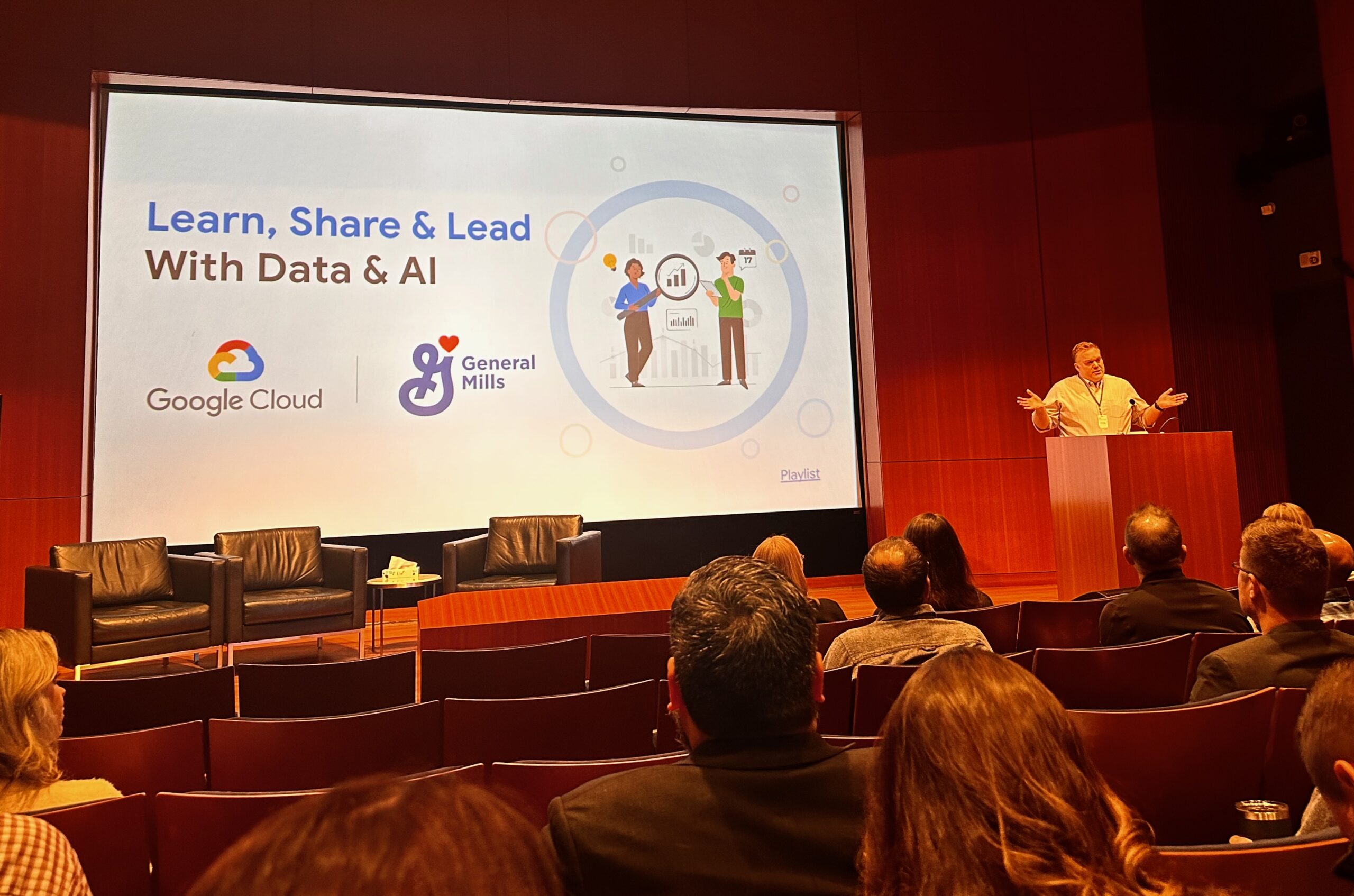
I attended an event yesterday at the headquarters of General Mills to hear how the company has partnered with Google Cloud over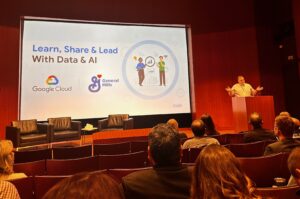 the past few years to transform itself in the age of cloud and AI. No doubt, hearing how any Fortune 500 could pull off something like this would be quite a story, I figured, let alone a company that’s been around for 155 years(!). Yes, we’ve been known to build ‘em to last here in Minnesota.
I pulled into Betty Crocker Drive in Golden Valley MN about 8:15 am and drove into the sprawling, grassy campus, with several gleaming buildings. I hear it’s not all that busy these days, however, what with remote work. But it may be the most impressive facility of any of our giant local companies for holding a big event like this. The crowd looked like it numbered 300 or more. Being that I’m a big fan of in-person events (but somewhat skeptical of AI hype), I had to check it out. Plus I felt an obligation to be there in light of my role as a board member of MinneAnalytics. (We love data and AI!)
So, what I thought I’d do is share my notes with you, along with some photos, plus stand-out quotes from the executive panel that followed the morning speakers.
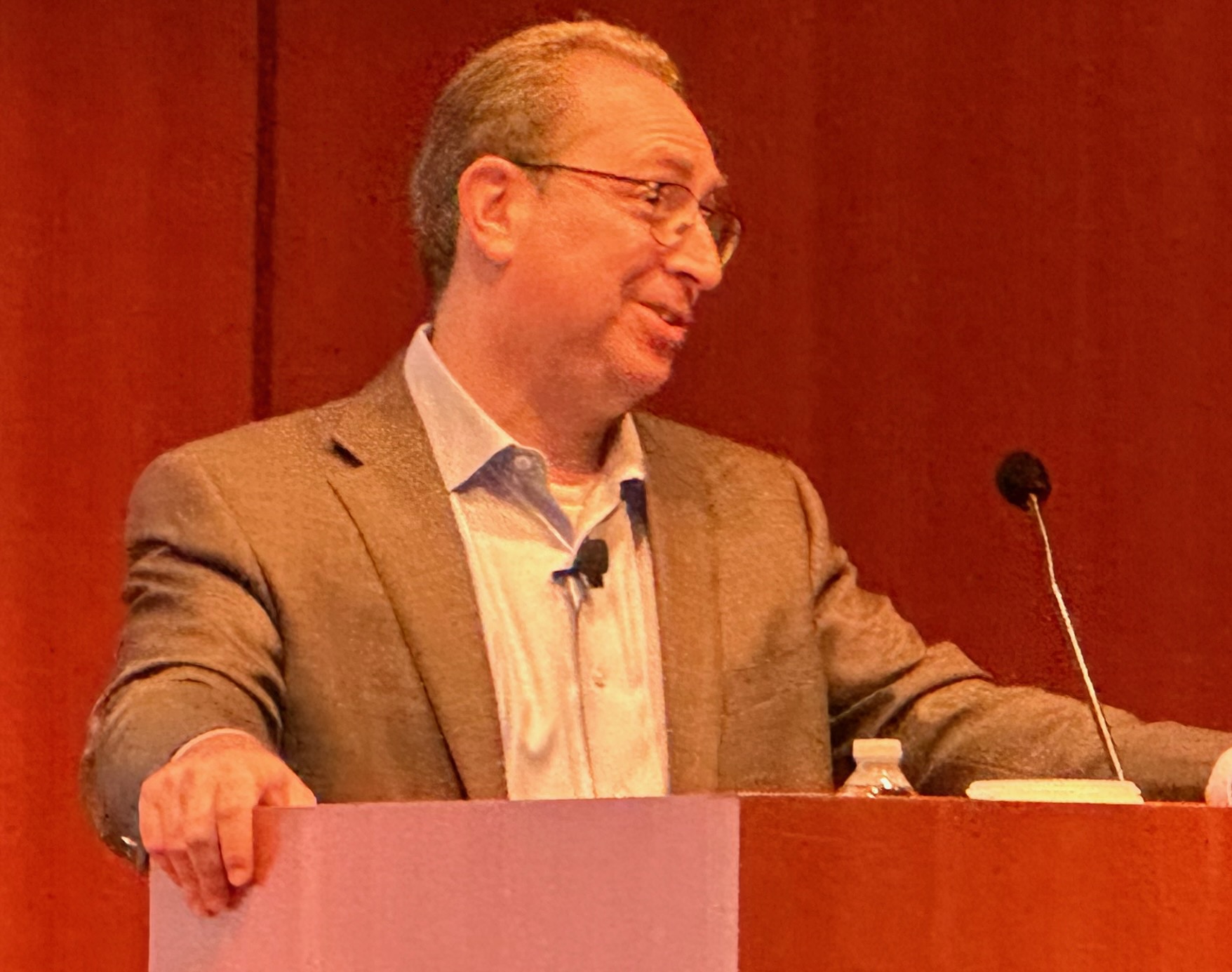
Notes from the Opening Keynote by Rich Rubenstein, VP-Data & Analytics

Rich Rubenstein
– All General Mills data is now on the Google Cloud Platform today.
– The company uses Vertex AI.
– “This is not a science-fair project. We use AI every single day.”
– The focus is on innovation — “in products, in go-to-market, and in how we connect with consumers.”
– On the topic of AI hype: “There’s a tremendous amount of light and heat in this space. But we know we have a solid foundation. We’ve invested in someone [Google] that we know can take us a long way.”
Some Remarks from Jenny Hon, Senior Director, Strategy & Enterprise Architecture
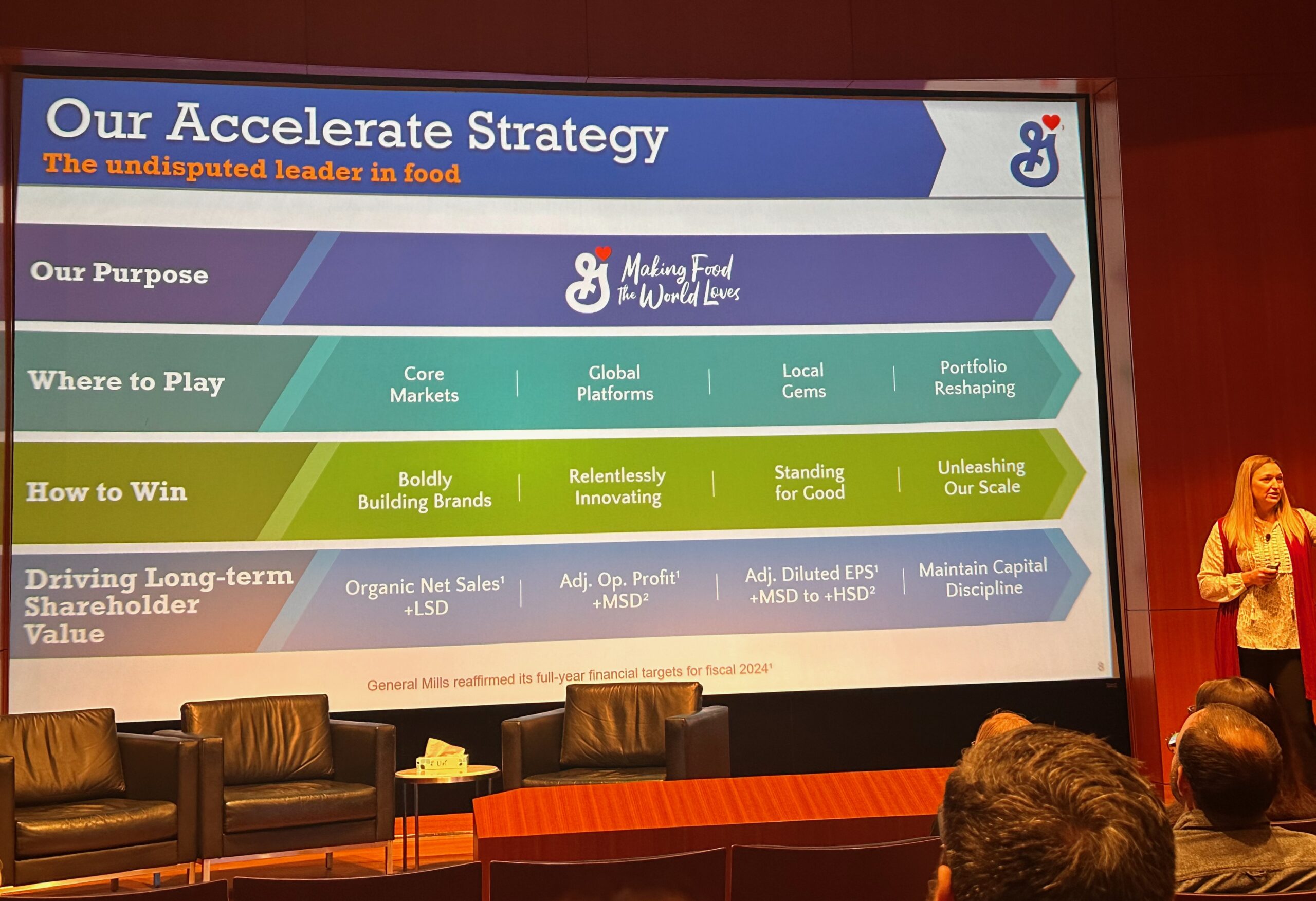
– The cloud transformation journey is based on the company’s purpose: “To be the undisputed leader in food.”
– “All signs indicate that our ‘Accelerate Strategy’ is working.” 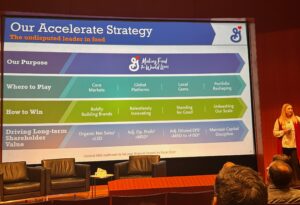
– How we win is by doing four things: “Boldly building brands, relentlessly innovating, standing for good, and unleashing our scale.”
– She noted that General Mills has nine billion-dollar brands.
– The company used Cloudera for a long time, “but it wasn’t enough to take us where we wanted to go.”
– What is cloud for General Mills? They focus primarily on infrastructure as a service (IaaS).
– Developing a FinOps practice has been a major focus — “to ensure business unit cloud spends don’t blow their budgets.”
Some Remarks from Josh Moe, Senior Manager, Enterprise Architecture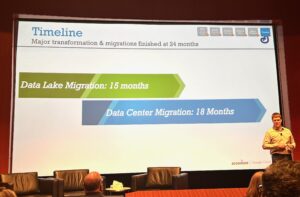
– “Our aspiration is to lead CPG in data and analytics.”
– The company began in 2019 with a big bet in data analytics with Google Cloud.
– They had looked at two major vendors [the other was Microsoft Azure].
– “We moved SAP from on-prem to cloud. There was a lot of complexity in that.”
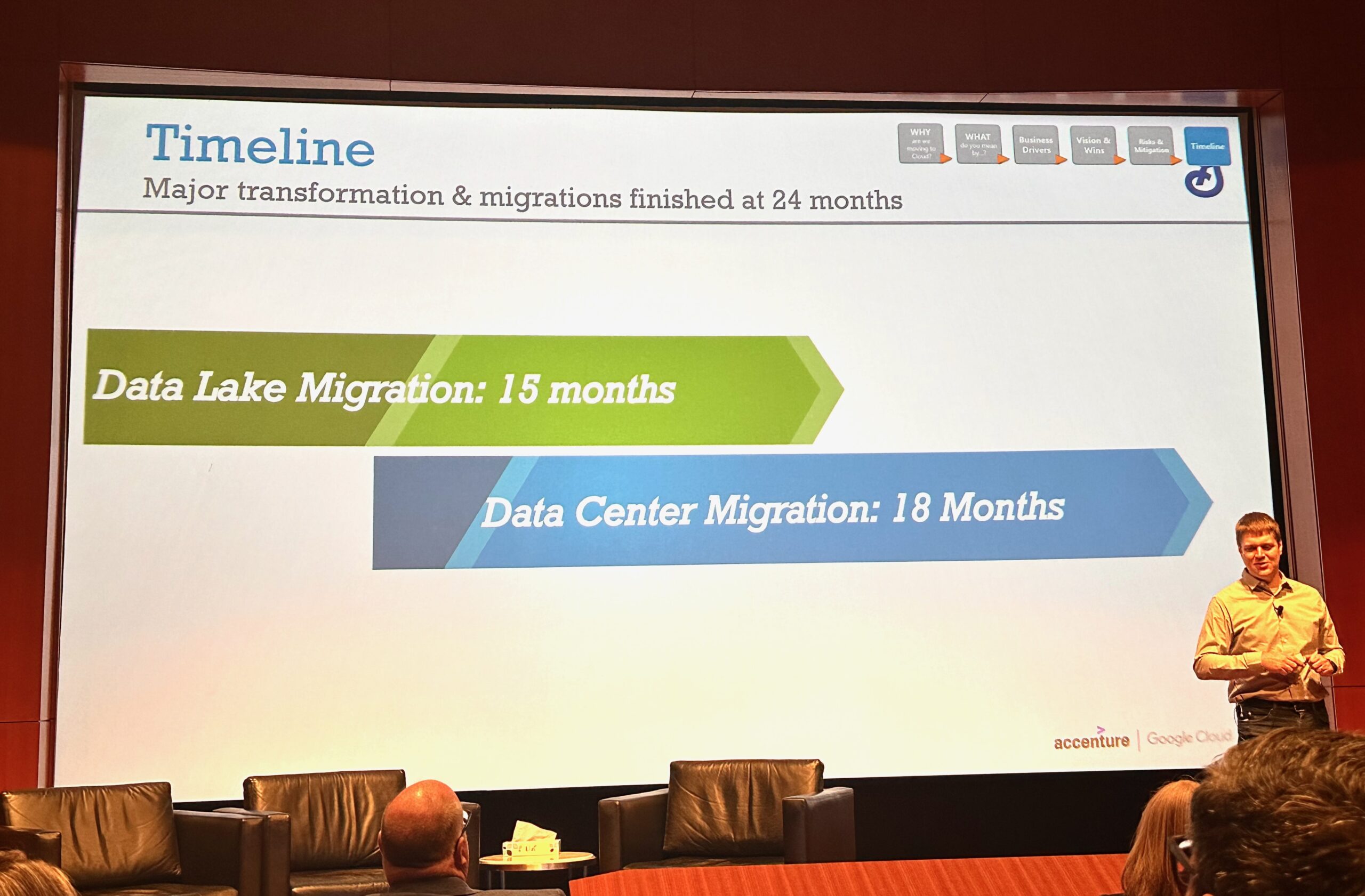
– “We did a major transformation and data migration in 24 months. Even Google doubted we could do that.”
– Specifically, the data lake migration took 15 months, and the data center migration took 18 months.
– “We did a full rebuild of how we do SAP.”
– The company’s “Analytics Enterprise Data Warehouse” is on BigQuery. “It’s the enabler of the work we’re doing in AI.”
– “We’re very intentional about our data. Do we own it? Or just subscribe to it?”
– The company has “Automated Self-Service Infrastructure Processes” that provide a simple and secure experience for its data scientists, product teams, and developers.
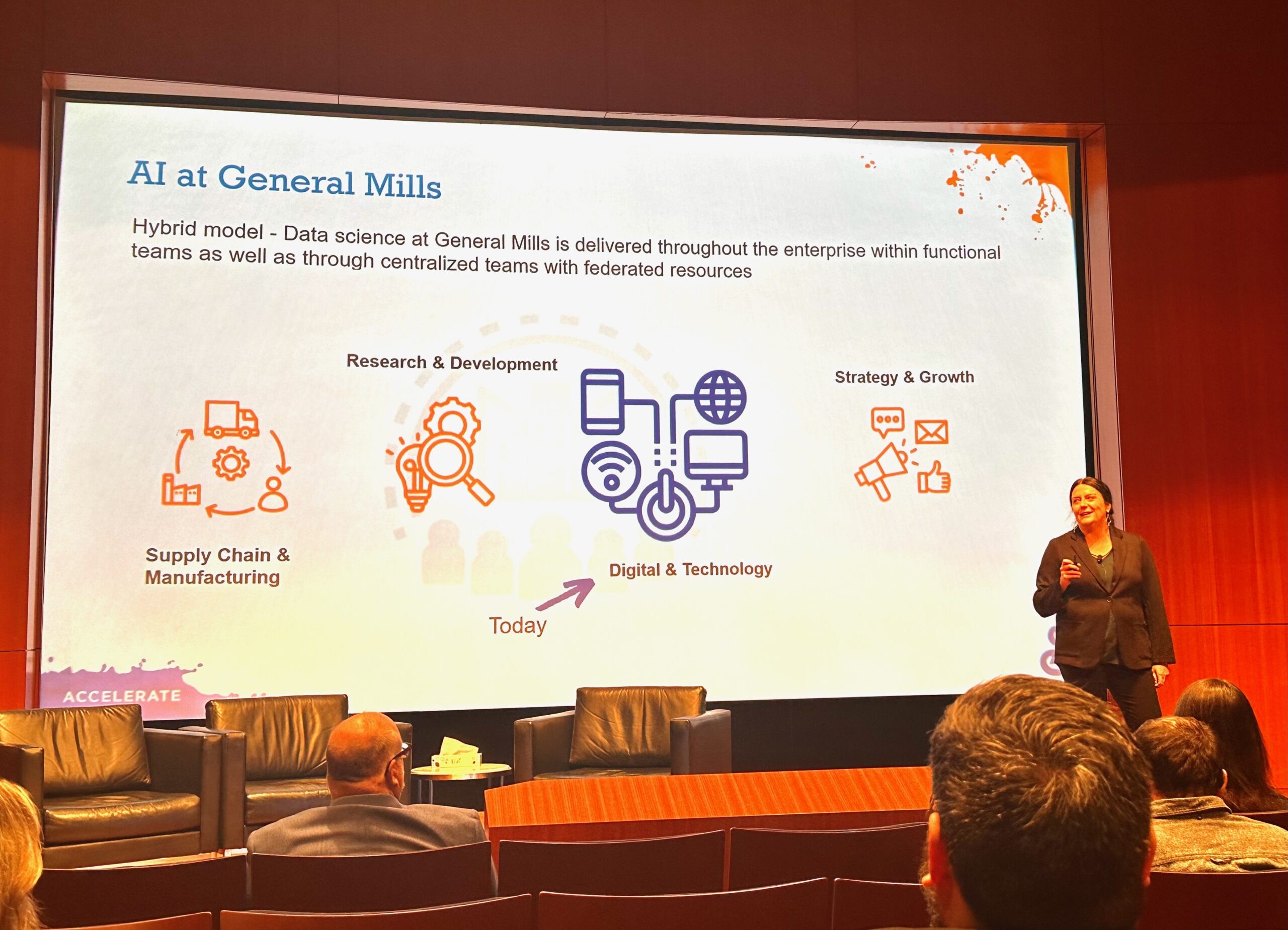
Some Remarks from Hanna Gordon, Director, Digital & Technology Data Science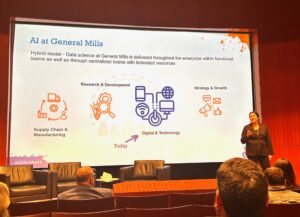
– She started with General Mills in 2016, and has managed rapid growth of its AI/ML team.
– In 2019, the team began work with Google Cloud and Google AI.
– Forbes has called her AI team one of the fastest-growing in the country.
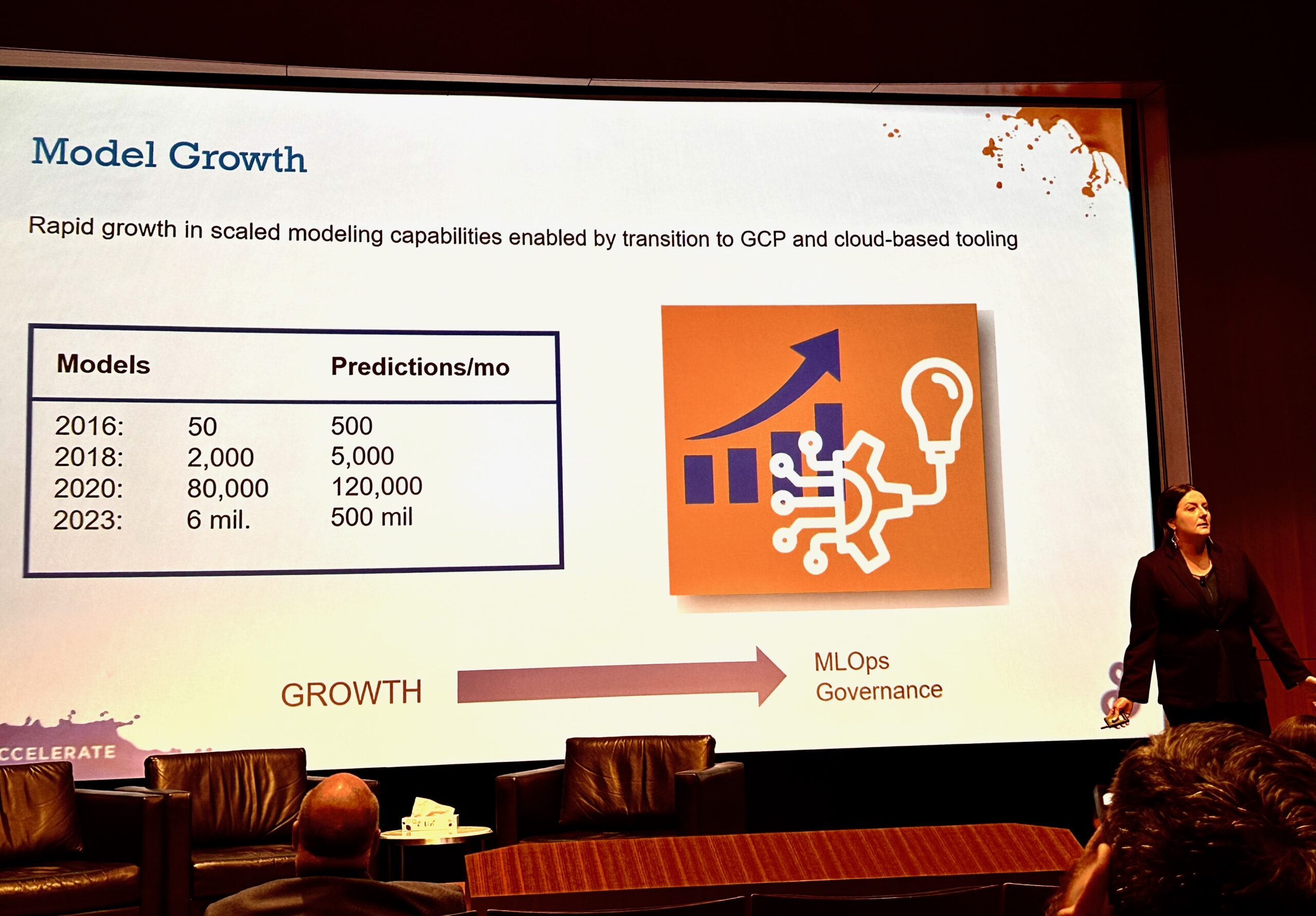
– “We have 6 million models in production today.” [Are you kidding me!?]
– Their first use case went live in 2020.
– In 2022, the company’s migration was complete and they began building a machine learning engineering team.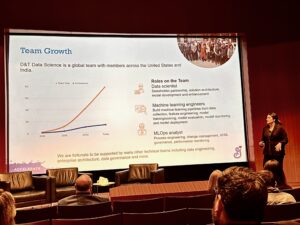
– In 2023, her team has been optimizing workflows, building MLops, and working with generative AI, “like everyone else.”
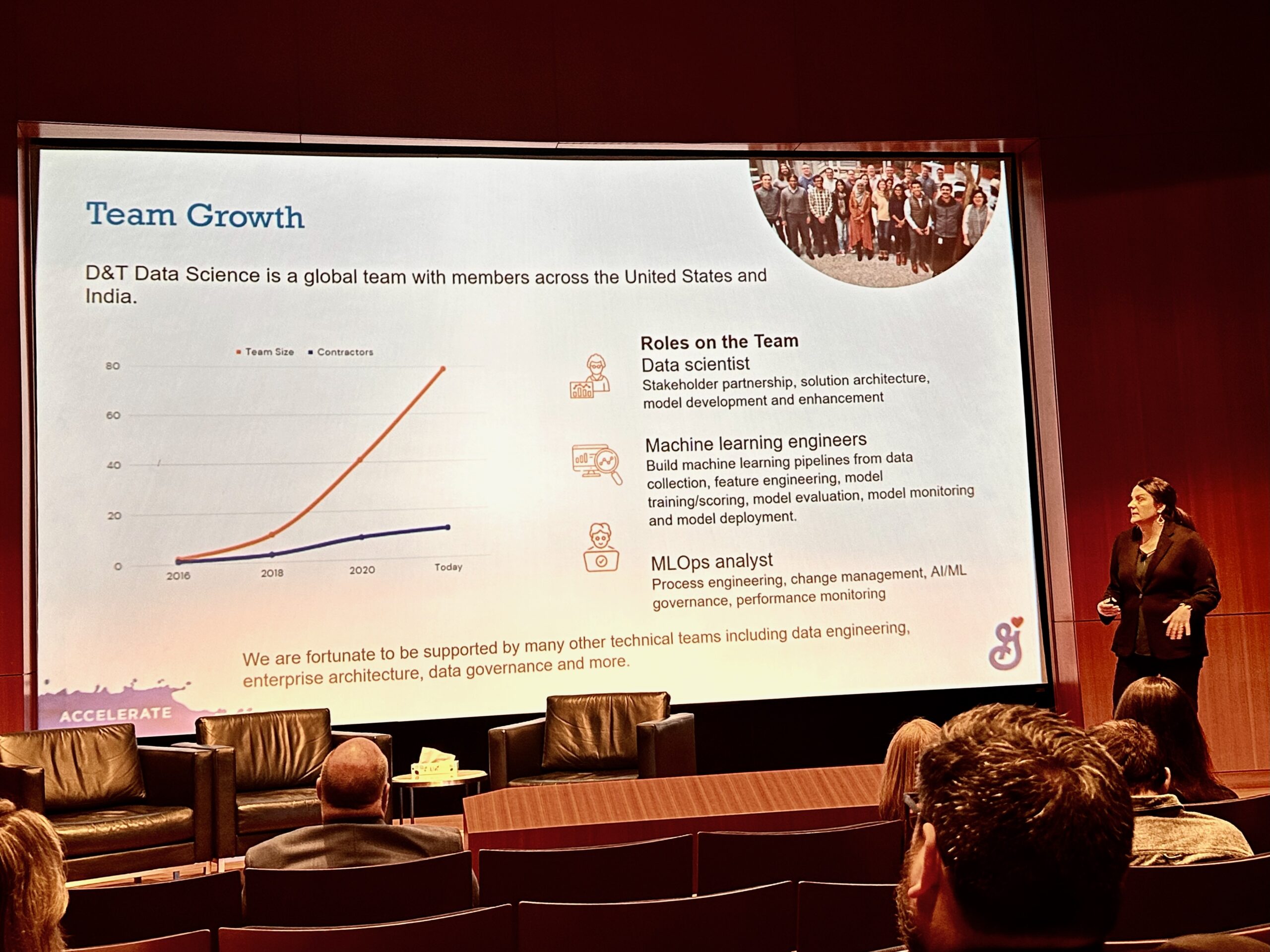
– The team now numbers 75 in the U.S. and India.
– They now have three core roles: data scientist, ML engineer, and MLops analyst (the most recent role).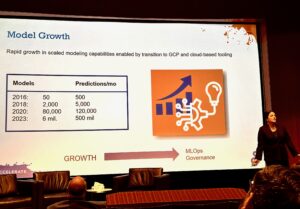
– She showed a slide (see “Model Growth”) that listed their number of models per year, and the number of predictions per month — now 500 million(!) from the current 6 million models.
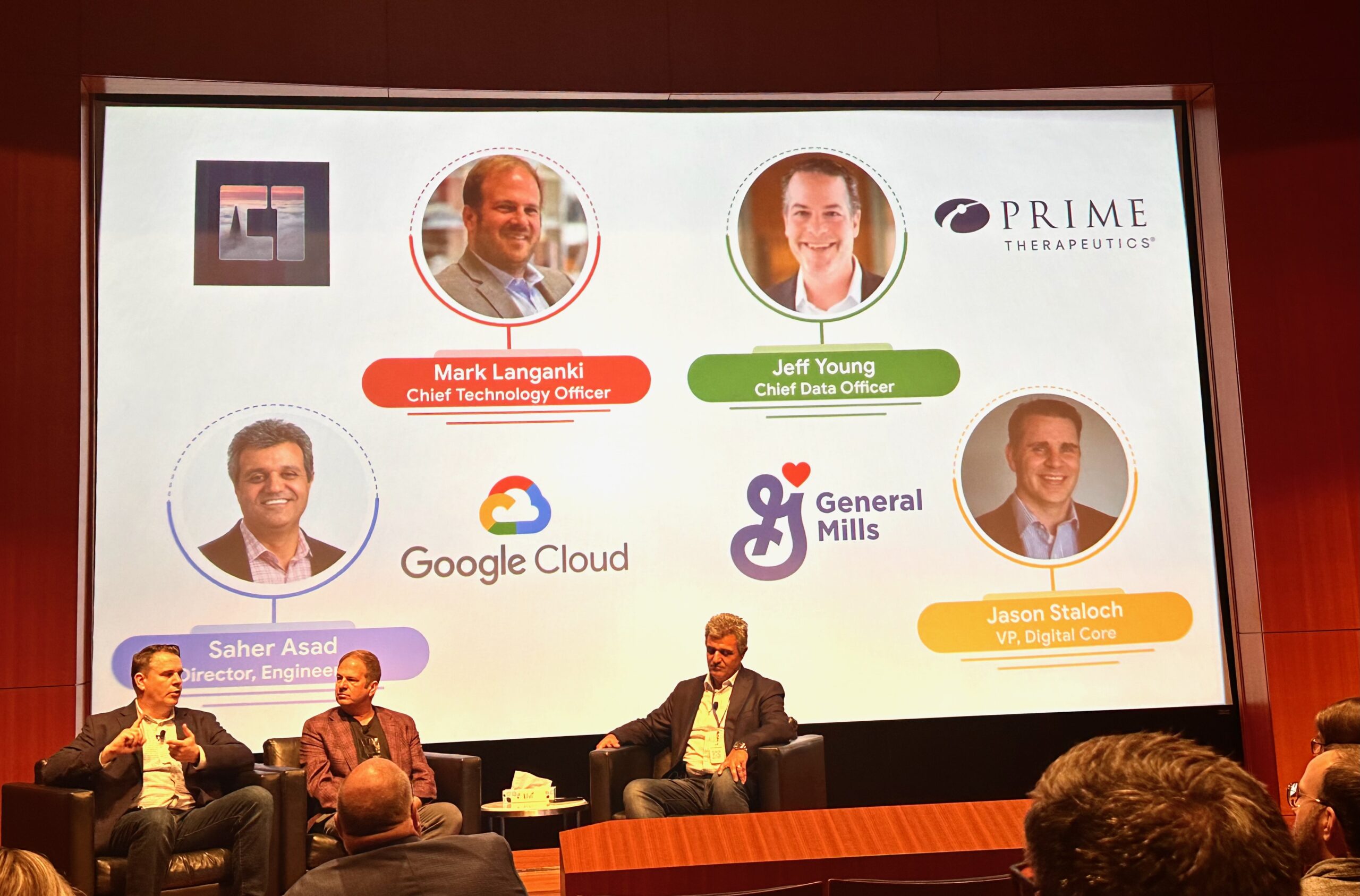
Following the above talks, after a break, there was an executive panel moderated by Saher Asad, Director of Engineering for Google Cloud. The participants were:
– Jeff Young, Chief Data Officer, Prime Therapeutics
– Jason Staloch, VP-Digital Core, General Mills
– Mark Langanki, CTO, C1 (ConvergeOne)
A few highlights:
– Staloch: “Gen AI is the third big thing [transformational technology], after the Internet and the iPhone, that really started on the 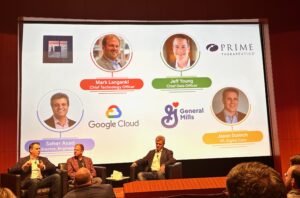 consumer side.”
– Young: “The first thing we look at with gen AI: is it safe and secure?… We have to be able to wall off our data.”
– Staloch: “There’s a closer relationship now between business and IT. We can tell the story better now.”
– Asad: “Gen AI has taken a lot of the complexity out” [of the AI journey].
– Langanki: “One use case we found, when a conversational chat answer is ‘I don’t know’, we feed that chat into gen AI to find out what the real question was.”
– Young: “Building internal literacy is important for us.”
– Staloch: “The focus should not be on finding a use case but, rather, what is the problem?”
– Langanki: “The conversation on a bot must stay private.”
– Asad: “There’s a big rush now in gen AI, but it’s not the answer to every problem.”
– Staloch: “We’re introducing a private LLM for employees.”
– Young: “The biggest challenge now is how to deploy AI at scale.” His advice: “Start slow. Make sure your data is as high quality as possible,”
One final point cited by Asad, the moderator: Gartner has found over time that only 60% of IT pilots make it into production. The firm also reported recently that it predicts 91% of future IT projects will involve AI. You do the math.
Thanks to General Mills and Google Cloud for putting on this event!
By the way, there were several more technical and hands-on sessions in the afternoon, but I wasn’t able to stay for those. I’ll be interested to hear from colleagues about those sessions.



Recent Comments