 Okay, here’s the 30th and last post in my “DEMO 2006” category (many also tagged in other categories, as listed on the right) since I began publishing pre-conference. So, who could have done more posts than this — maybe CNet? Then again, quantity isn’t everything… 🙂 But I was honored to be on a list with many of the great bloggers covering the event — especially since it was my first conference as a blogger (though not as a reporter, for which the number is probably 40 or more).
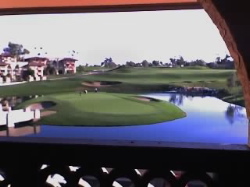
Just for the heck of it, I’m including a few photos of the surroundings at Demo, which I took with my cell phone cam — showing things I was too busy to do, like golf, pool, hot tub. But I didn’t care — didn’t have time to. [Besides, I had my beach time and a surf session in San Clemente the day before I got there.]
This post is essentially my recap on the themes or takeaways I got from this great happening….this blockbuster celebration of tech and entrepreneurship. Net-net: I wouldn’t have missed it for the world!  It was non-stop buzz, business models, and blabbing about everything imaginable relating to today’s souped-up economy for technology startups (especially Internet-related ones)…a giant energy-drink slurpee lasting three days. And the people — wow! I know I met many who’ll be valuable contacts and friends for years to come. Plus I learned about some cool new services that’ll help me in my crazy, tech-challenged world…just as I know they’ll help you.
So here, as best as I can break down something this intensely information-packed, are the themes I got from DEMO 2006. (Note time didn’t allow me to post about every single one of the companies I mention here; but I’ve included links to all their sites if you wish to read more.)
• User-generated content and sharing is exploding. To say that consumer-generated content is a major trend in this age of “new media” and social networking I don’t think will surprise you. If you’ve read some of my previous posts, you know it was the major theme of the conference. [And there would be a sub-theme you got out of reading those, too: revenue-sharing with content creators.]  Companies in point who presented at Demo that are taking advantage of this trend in various ways include: Vizrea, TagWorld, SmileBox, Zingee, LocaModa, Sharpcast, Tiny Pictures, GarageBand.com, Yahoo! Photos (of course), Multiverse Network, and Gravee….and I posted about every one of ’em.
• Search goes wider, search goes deeper. Meaning more data types as relates the former, and, no surprise, going vertical for the latter. Presenting companies that fit into this theme included Krugle, Riya, AOL via its acquisition of Truveo (online sometime this spring), Nexidia, Gravee, BiggerBoat, Kaboodle, Raw Sugar, and Kosmix….several of which I posted about.
• E-commerce can still get better and easier. As big as it is (one example: BestBuy.com, a site on whose launch team I served, is now selling more than a billion bucks a year), we’re hardly done with e-commerce improvements. And that notion is sure to be welcomed by today’s increasingly savvy, instant-gratification online buyers. Companies worth a look here include Transparansee, Pay By Touch, and PayWi (which lets you buy from your cell phone). I was also impressed with CNet Channel’s intelligent cross-sell technology. This is a tool for e-tailers that with save a huge amount of hassle, automating what’s been a very time-intensive and hit-or-miss process for online store managers.
• Now that phone service is free or really cheap, what more can we do with it? Skype thundered into this space in a huge way — and thank God people now have a decent moniker they can attach to the concept instead of “VOIP”! And the category will only get huger, as we all know. Watch out for upstarts that are gonna ride this trend with more innovations — such as being able to make Skype calls from your cell phone: EQO Communications…and getting a whole rich set of features for your VOIP residential service: My People.
• Small business needs big help with information technology. It’s a huge market, but what will appeal to them and how do you reach them? Two companies that are giving it a try are Interprise, which has a free online ERP/CRM solution for the little guys….and Sprout Systems, which is developing online solutions for companies with 10 employees or fewer, coming out of the chute first (now seeking Series A) with an email management system. [I wish both luck. Raise the big bucks, or get a deep-pocketed gorilla to buy you.]
• P2P is not going away – and more apps are on the way. If you think peer-to-peer technology had its day, think again. Just because it got a bad name for a while doesn’t mean it won’t change the world. At least three of the presenting companies at Demo are using the technology to buiild their dream: Zingee, a flat-out content sharing play, as I posted about previously…Vsee, which is using the technology to improve desktop video conferencing…and Tiny Pictures, which says it has P2P technology to enable you to share your cell phone pix quickly and easily.
What DEMO 2006 was NOT about. The biggest thing was it wasn’t about gadgets, as the event was known to have been for so many years. Today, the technology world — whether it’s consumer or enterprise — is much more about services. Gadgets are only a means to enable a service, for the user to do something valuable he or she needs to get done. I sit here hard-pressed to name game-changing gadgets presented at the event…. Okay, there was MooBella, the customized, Linux-based ice cream vending machine, and Pleo, the new robotic toy from the inventor of Furby. Yeah, they were cool, but so what? I’m not in the food business or the toy business, and I don’t think most of you are either. The producers threw those in just for shock value and dramatic effect. [And, trust me, Demo’s producers know how to get publicity. They also know how to get buzz, which is why they had so had so many bloggers there. If you want to know what I mean, read this great new post from Guy Kawasaki on how to get buzz these days.] Two gadgets of note I just remembered were the iGuitar — very cool, but you gotta be a musician, which I’m not anymore (surfing took over)…though it’s a big market space ($3 billion) they’re playing in. And the Chili™ from ZinkKat was the other one. But don’t try to find a photo of the device on their web site — it hasn’t been updated since before DEMO! [Hello?] The Chili is the “first wearable cell phone/MP3 player/Podcast and web stream receiver, all on one,” says the company, which is aiming it (of course) at teenagers, for use in the home. [Too bad the voice interface, which is how you operate the thing, sounded so bad. Here’s a clue: no matter how cool your gadget looks, if the interface isn’t right, you have some…uh, work to do?]
And one more thing to take away from DEMO. We’re all learning a lot about blogging, folks. Me included. [And there’s nothing like throwing yourself into it headlong to learn from the inside.] 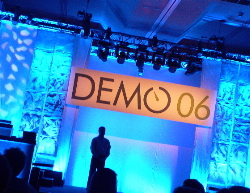 But I was fascinated by how blog-savvy so many of the companies are that launched at DEMO — and I learned a lot from them. They get the blogging model, the power of the blogging community. They spent just as much time talking up the bloggers as they did the traditional press. Blogging is even changing the model of how some tech companies launch — read: without traditional PR. My fellow blogger and conference reporter Shel Israel did a great post on this topic (just prior to Demo), and this is about the third time I’ve linked to it — it’s that major. Just another example of how the growing online community is changing the game. And Guy Kawasaki’s post, cited above, just adds to that message.
Hope you liked my DEMO coverage. Please drop me a line if you did — or better yet, post a comment.
Cheers…over and out.
Tag: Demo 2006
[Written at Bloomington, MN, on the coldest weekend
of the winter so far…ah, sweet memories of Phoenix.]

Recent Comments