Reflections & analysis about innovation, technology, startups, investing, healthcare, and more .... with a focus on Minnesota, Land of 10,000 Lakes. Blogging continuously since 2005.

Category: Semiconductors

The Coming $1-Trillion Space Economy, and How Minnesota Plays Into It

Our state may not launch rockets, but it quietly builds the technologies that make the growing space economy possible.

Minnesota actually has a surprisingly deep set of companies connected to the space industry. Many state firms provide materials, electronics, engineering services, sensors, and manufacturing that go into spacecraft, satellites, and launch systems used by organizations such as NASA, SpaceX, Boeing, and Lockheed Martin.

Several notable Minnesota companies are directly or indirectly participating in the space economy. Here are just some of the state’s companies with space industry connections

1. ION Corporation (Eden Prairie) – Aerospace engineering and testing company doing direct NASA mission work.
2. Stratasys (Eden Prairie – Nasdaq: SSYS) – 3D printing is increasingly used for rocket engines, brackets, and satellite components.
3. QuesTek Innovations (has a facility in Waconia) – Advanced alloys and materials for rocket engines and extreme thermal environments.
4. Collins Aerospace (Burnsville) – Part of Raytheon Technologies. Collins systems are used in satellites, spacecraft navigation, and communications payloads.
5. Northrop Grumman (facility in Plymouth) – Global aerospace contractor. Minnesota operations contribute to electronics, engineering, and mission systems.
6. BAE Systems (Minneapolis) – Builds radiation-hardened electronics, sensors, and spacecraft avionics used in many satellite systems.
7. Chandler Industries (Minneapolis) – Supplies high-precision components used in spacecraft assemblies and aerospace hardware.
8. EarthDaily Analytics (U.S. operations in Maple Grove) – Uses satellite data and space-based imaging analytics for agriculture and climate intelligence, an important part of the satellite data economy.
9. Timmaron Group (Minneapolis and Silicon Valley) – Was a solution architect in the development of Starlink’s satellite system.

An Emerging Space Infrastructure Project

The Minnesota Aerospace Complex in Rosemount is a planned $1+ billion hypersonic testing and aerospace facility. Potential uses will be testing hypersonic vehicles, spacecraft reentry materials, and advanced propulsion systems. If completed, it could become one of the largest aerospace testing facilities in the U.S. (More here.)

Three Main Sectors

These Minnesota sectors feed the space industry:
• Advanced manufacturing: Minnesota has strong precision machining and electronics supply chains used by aerospace primes.
• Robotics & autonomy: Companies building robotics and AI systems for inspection, drones, and autonomous vehicles may transition to space applications.
• Satellite analytics & AI: Minnesota’s agtech and geospatial analytics firms increasingly rely on satellite data.

Little-Known Companies, But Some Big Ones, Too

Minnesota doesn’t yet have a large cluster of rocket startups, but it does have a quiet ecosystem of organizations connected to the space economy — often through satellites, materials science, robotics, geospatial data, and advanced manufacturing. Think the supply chain of space.

In geospatial and satellite data, consider Descartes Labs. It was founded in New Mexico but maintains a significant Minneapolis engineering presence. (Note: In 2024, Descartes Labs was acquired by EarthDaily Analytics, which has operations in Maple Grove.) It uses satellite imagery and AI to analyze agriculture, climate, and geopolitics. Its customers include U.S. government agencies and global enterprises. It works with data from NASA, ESA, and commercial satellite constellations. Satellite data analytics is one of the fastest-growing segments of the space economy.

In the category of robotics, sensors, and autonomy, don’t forget about a major tech firm like Seagate Technology (Nasdaq: STX) with its work in advanced data storage R&D. Storage systems are used in satellite ground systems and data infrastructure. Its technology supports satellite data processing pipelines.

Another publicly traded firm is SkyWater Technology (Nasdaq: SKYT), a Bloomington-based semiconductor foundry. It produces radiation-tolerant chips and advanced microelectronics. Radiation-tolerant semiconductors are essential for satellites and deep-space missions.

Why Minnesota Could Become a Space Supply-Chain Hub

Thus, Minnesota has many ingredients needed for space-industry infrastructure. Again, these are our main strengths: 1) advanced manufacturing – including precision machining and aerospace components, 2) materials science – extreme-environment materials and additive manufacturing, 3) semiconductors – specifically radiation-hardened electronics, and 4) AI and geospatial analytics – which is turning satellite data into usable insights.

A Trillion-Dollar Industry On the Verge of Breaking Out

For a further perspective in the space industry, and how 2026 could be the year things really take off (pun intended). see this recent blog post from my client Timmaron Group. (SpaceX IPO, anyone?)

And this recent WSJ article will provide some further perspective: The Space Economy Is Mission-Critical. Here’s What Leaders Need to Know.

——

Postscript: The list of Minnesota companies above is not intended to be all-inclusive. Know of another company doing space-related work here in our state? If so, tell me in the comments.
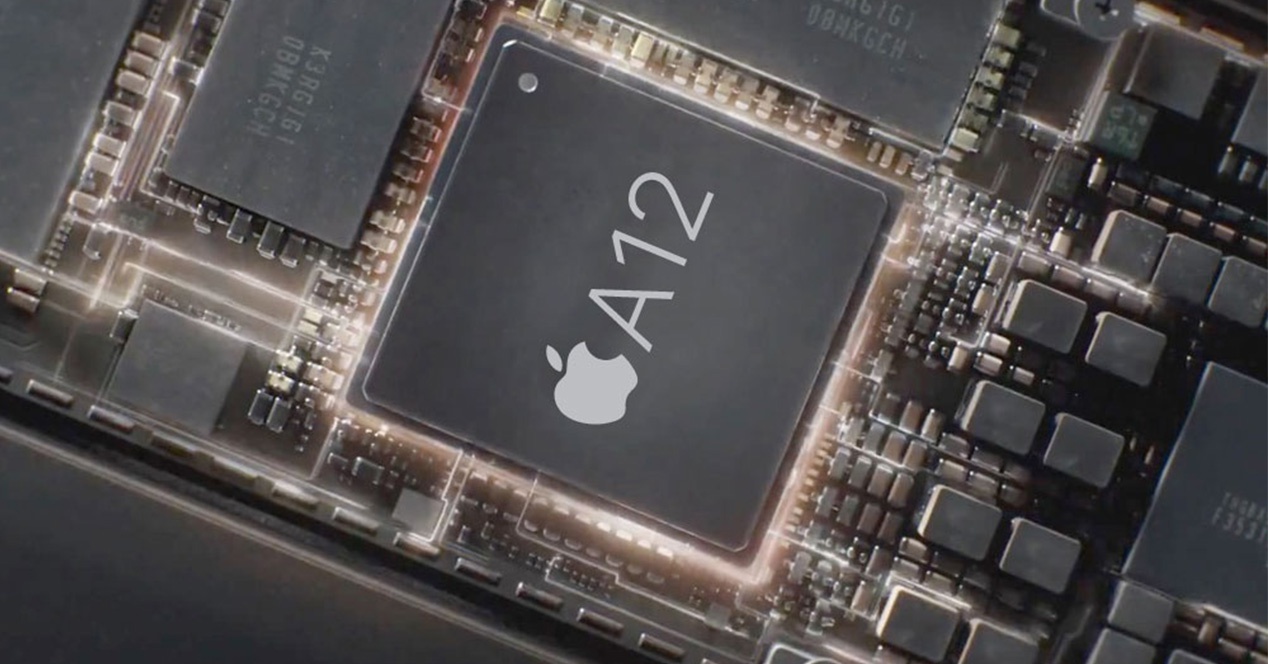
 

The Story Isn’t the iPhone Xs – It’s What’s In It: the A12 Bionic Chip

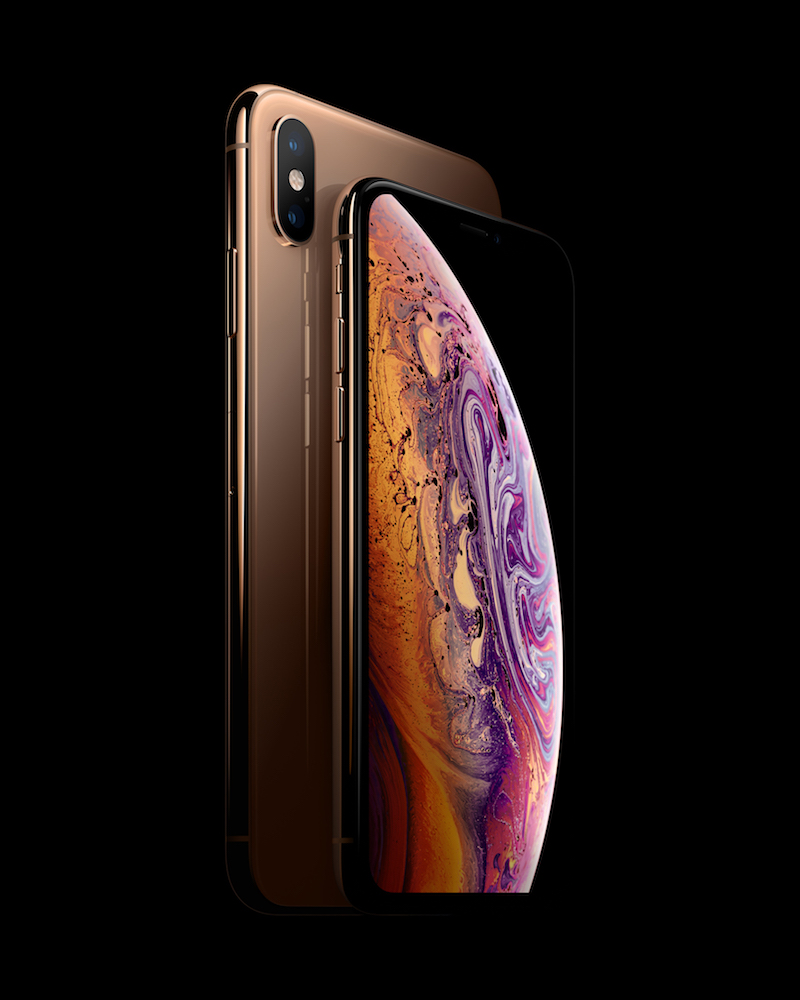
iPhone Xs

Click on image to enlarge.

Maybe you heard there was an Apple event? And a new phone, the iPhone Xs? And I’m guessing you saw a gazillion media stories, too, about how darn expensive it was, right? That’s actually a major pet peeve of mine — the lamestream media just cannot let go of that same tired old line. Who can afford these things? How will people ever pay that much for a phone? Blah, blah, blah. Well, you know how it always turn out. Um, Apple does okay.

Three things make that lame media line pathetic. First of all, it isn’t just a phone — it’s a supercomputer. (Do you know what those used to cost? Meaning the equivalent computer power, not that long ago.) Second, it’s the computer you use the most, if you’re like most people. (And for some people, it’s their only computer.) From that perspective, the iPhone is downright cheap. Have you ever paid multiple times the cost of an iPhone for a computer? One that won’t fit in your pocket. I sure have.

And, third, hardly anyone pays for an iPhone upfront, anyway. Small monthly payments make it like a utility. Less money than what many people spend monthly at Starbucks.

So, now that I’ve totally destroyed that meme, I’ll get to the point of this post… 🙂  And that is this: not only is the iPhone Xs a bargain, but it is by far the best smartphone out there, ever,  because of what powers it: the A12 Bionic chip.

Here’s what some very smart journalists say on that subject:

Stephen Shankland, CNet (“A12 chip gives Apple big advantage over rivals“):

Click on image to enlarge.

The A12 is the industry’s first chip to be built using a 7-nanometer manufacturing process. A nanometer is a billionth of a meter, so when Apple moved from the A11 chip’s 10nm process to the A12’s 7nm, it meant the company could stuff twice the number of circuit elements called transistors into the same surface area. In the case of the A12, that’s 6.9 billion transistors.

You don’t necessarily need to understand the nuances of transistor sizes or just how small a nanometer really is. The bottom line is that the advancement will let the iPhone XS and XS Max run graphics 50 percent faster than 2017’s iPhone X, while artificial intelligence software will work 8 times faster. And perhaps most important, your battery won’t get drained.

The A12 “is so far ahead of the industry that it will still be competitive with the best Android smartphones in two years, and massively more powerful than lower-end phones,” said Stratechery analyst Ben Thompson.

The real advantage of the 7nm process is that Apple can do it all without flattening your battery. “The lower power can extend battery life or allow Apple to push the performance up by 20 percent when the user needs the extra boost,” said Linley Group analyst Linley Gwennap.

The chip industry has been in a pickle for more than a decade as the previously steady progress in ever-faster processor clock speeds sputtered. That’s forced chipmakers to figure out other ways to try to make chips better, because no longer does the same software automatically run faster with each new chip generation.

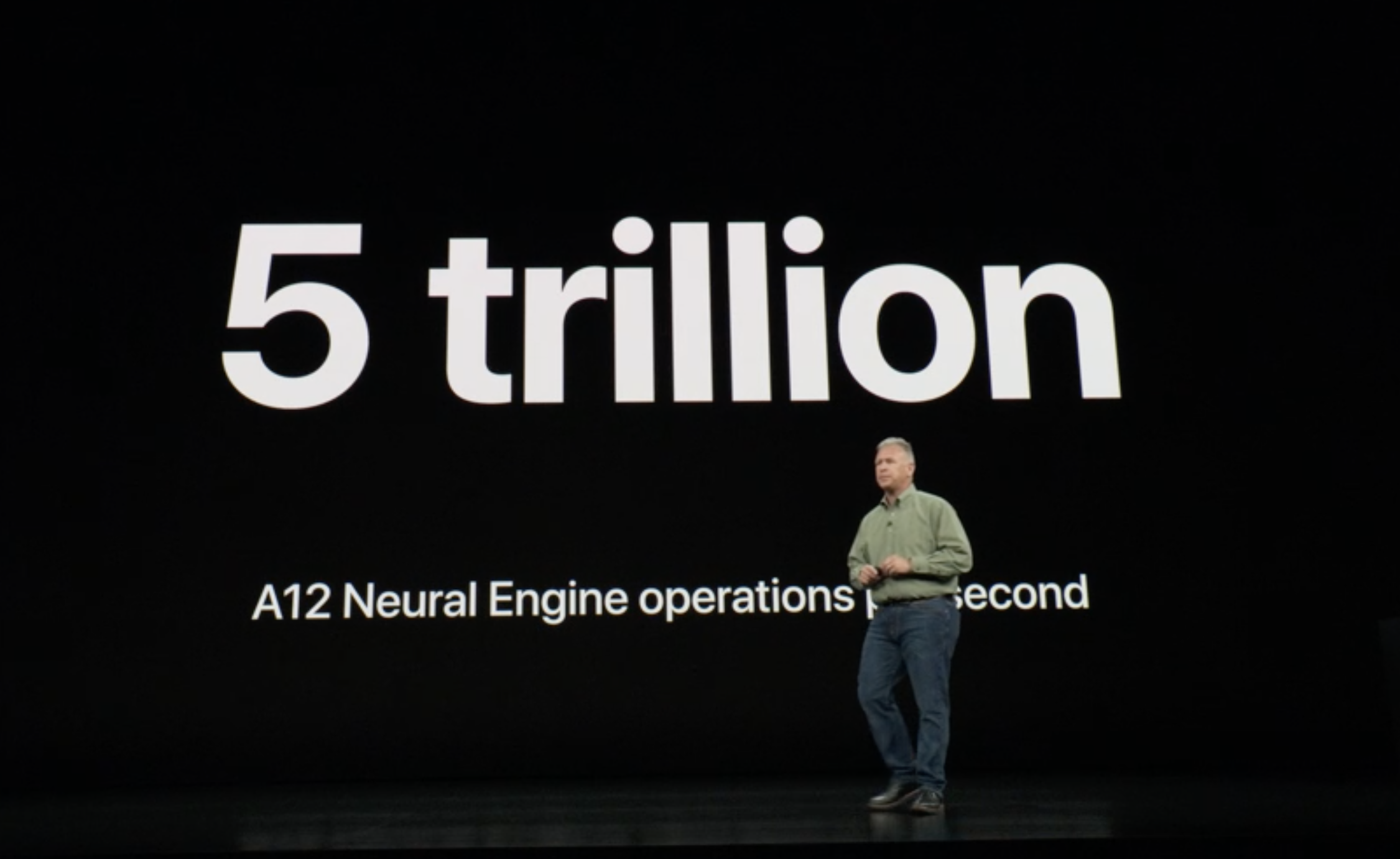
5 trillion operations per second

Click on image to enlarge.

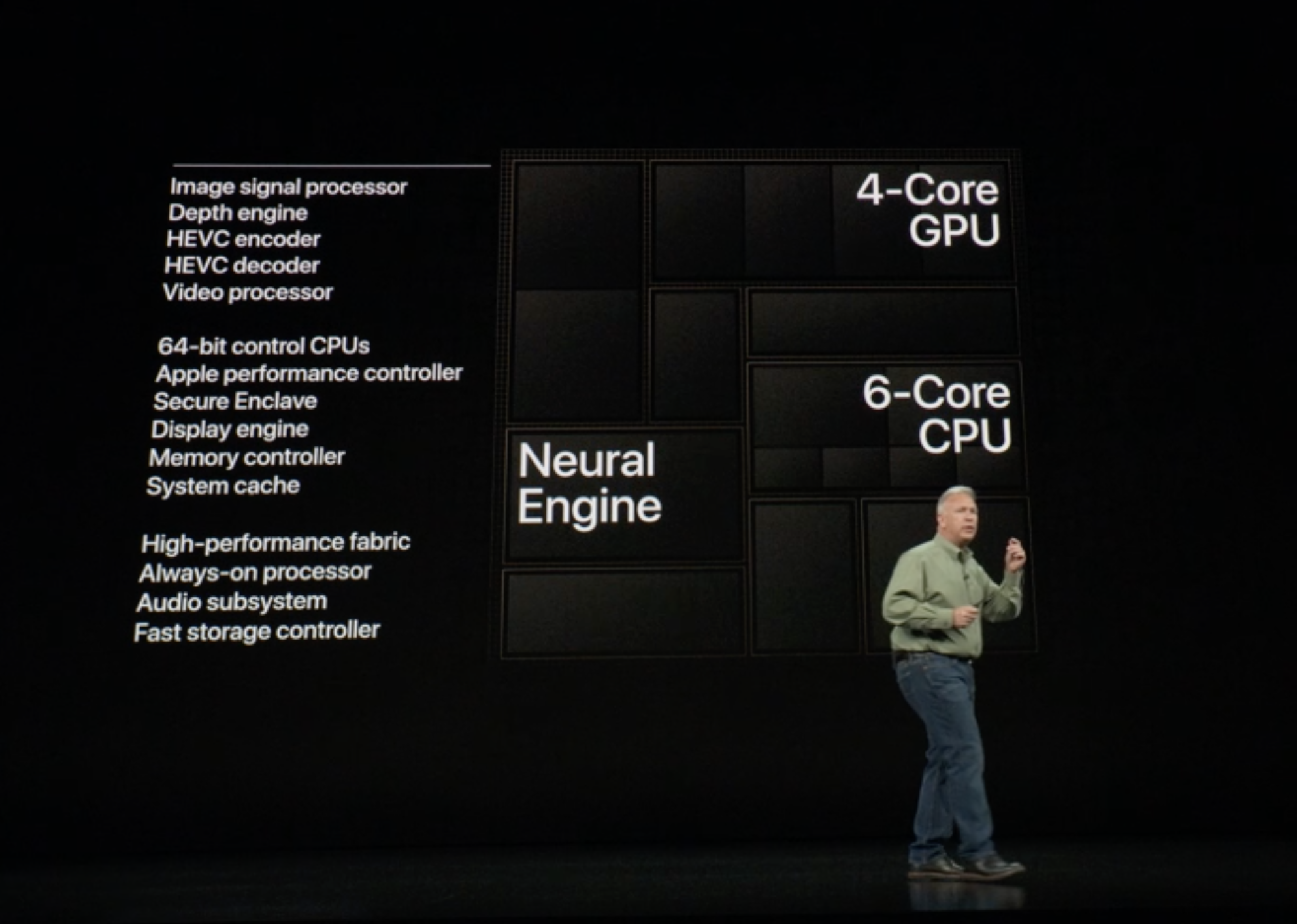
Special-purpose circuitry has been one primary coping mechanism. First came graphics processing units, or GPUs, which accelerate not just gaming effects like hazy air and gleaming chrome, but also physics calculations that make explosions look real. Apple’s A11 chip had three GPU engines called cores, but the A12 has four.

More recently, chipmakers have begun adding chip technology to accelerate artificial intelligence chores. AI — also called machine learning and neural networks these days — can let devices understand speech commands, take better photos and recognize unhealthy heartbeat patterns. The A12’s built-in AI circuitry can perform 5 trillion operations per second, an eightfold increase over the A11.

Apple is in a strong position compared to some phone rivals because it controls not only the processor but the operating system and other software like speech recognition and photo apps. The company can ensure all the parts of the system work well together.

——–

Om Malik, Partner, True Ventures, and Founder, GigaOm (a portion of his notes on the Sept 12 Apple Event)

That new shiny new A12 Bionic chip with more cores in its neural engine, ability to do way more with its GPU and CPU… seriously— this is the most impressive work…. this is some chip nerd nirvana. Here are some facts about the A12 Bionic. It has:

Click image to enlarge.

• 6.9 billion transistors.
• Two high-performance CPU cores deliver 15% more speed and 40% greater efficiency compared to the A11.
• Four other CPU cores are 50% more efficient than those on the prior chip.
• Six-core GPU designed by Apple. It is 50% faster than the block on the A11.
• New neural engine sports eight cores, versus two in the A11, giving it a nine-fold performance bump vs. A11.
• CoreML machine-learning framework can hit 5 trillion operations/sec, versus 600 billion ops/sec on the A11 using one-tenth of the energy.

What does all this mean? This is the first serious edge-computing device with more oomph than many laptops. The neural engine can now do a lot of those things Google does in the cloud — on a device. When it comes to automatic video editing and stuff such as the identification of faces, we are going to see the power of this chip. The gaming demos and the ARKit 2 demos, should be enough of a clue as to what this new chip can enable…  there is something special about the iPhone Xs. And that’s Bionic!

——–

James Vincent, The Verge (“A12 Bionic chip ‘the smartest and most powerful chip ever in a smartphone’):

The end result should be the same as ever: faster apps… More tangible, though, will be the new functionality enabled by this sort of processing muscle. Particularly apps that use the company’s machine learning framework, Core ML, which the new A12 Bionic runs nine times faster than last year’s chips.

——–

Rick Merritt, EE Times, in his report after the Apple event:

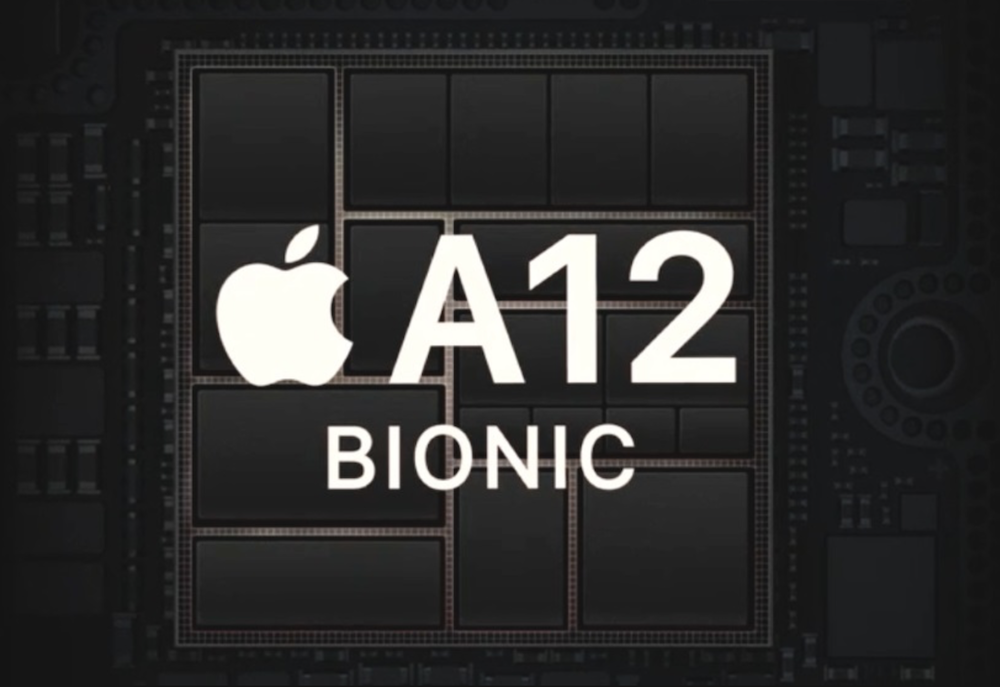
A12 Bionic chip. © Apple Inc.

Click on image to enlarge.

The (A12’s) performance will speed a variety of operations, including unlocking the phone using Apple’s facial-recognition software. It also enables a new capability to group multiple Siri functions into shortcuts.

Third-party developers showed applications using Apple’s CoreML and ARKit 2 frameworks to enable new features supported by neural nets. They included Homecourt, an app tracking six metrics of basketball performance in real time, as well as new features in mobile games using augmented reality.

“The A12 is a game changer,” said Tim Bajarin, a veteran Apple watcher and president of Creative Strategies…

The iPhone XS and XS Max include dual 12-Mpixel-wide and telephoto cameras… (which) support a variety of features, including HDR10 and adjustable depth-of-field, relying on an image processor and the neural engine in the A12. “This is a new era of computational photography,” said Phil Schiller, Apple’s vice president of marketing.

——–

I didn’t need any more convincing than that, plus what I saw with my own eyes watching the live stream of the event. I ordered up an iPhone Xs Max as soon as I could, to replace my iPhone X, which I got in late 2017. I’m on the iPhone Upgrade Program, so the process is easy. I make monthly payments for my phone, automatically deducted from my business account, and I can upgrade to the latest model once per year. The net upcharge for me this time? Only five dollars more per month! … to get all the amazing new features and performance of the iPhone Xs Max. (I also had to pay off a small balance on my previous contract, as I was two months shy of a year with the iPhone X.)

It was the No-Brainer of the Century for me! And my new iPhone arrives within about two weeks.