Pretty much every exec who matters in the $6 trillion travel industry [the biggest industry in the world, they tell me — bigger than oil even?] was either in Hollywood last week for the PhocusWright Executive Conference or wished they could’ve been. Well, for the latter group, perhaps this little recap of mine will help. And I suspect it will be of interest to anyone at all with a reason to pay attention to this huge caldron of commerce. That would especially include online advertisers that quite understandably lust after this rich consumer demographic.
Forbes calls the travel business a “global honeypot.” What’s interesting now is that the industry itself is the first to admit it’s experiencing disruption from the phenomenon we call Web 2.0. I love stories like this! Hey, where change of this magnitude is brewing, conferences just get real, real interesting. And you know me: I enjoy getting into the middle of the action at these things and blogging about it. [And this is now my eighth post on this event.]
Let’s face it, all of us as travel consumers have an interest in this topic. What new travel sites, tools, mashups, or other developments will change the way we plan and purchase our travel? My take is, who can not be interested in this topic? So, hopefully this wrapup of my coverage of the event will be of interest to you no matter what your job or profession. Note the comments I’m including here don’t offer the perspective of an industry insider — they’re just the random observations of a tech-savvy, Web 2.0-ish consumer and trend-spotter of sorts, who’s admittedly on the outside looking in here….
Setting the Stage
PhocusWright has been doing this event for 13 years now, and themed it this year with the very provocactive line, “Travel 2.0 Confronts the Establishment.” As in the little guys eating the big guys’ lunch! Or at least shaking things up in this big, big space…. There was a lot of talk about how things have progressed in the past decade: Travel 1.0 (nee 1996) vs. Travel 1.5 (nee 1999) vs. the new era of Travel 2.0, which is now causing much change in the online portion of the travel business. This sector, of course, continues to grow much faster than offline travel (i.e, traditional travel agencies and paper tickets).
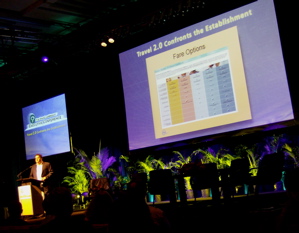
Some Definitions
• Travel 1.0 = represented by the OTAs (online travel agencies), a category that generally encompasses what’s called “The Big Three”: Expedia, Travelocity, and Orbitz.
• Travel 1.5 = embodied in the “metasearch” engines (think comparison shopping sites) such as Kayak, SideStep, Mobissimo, TravelZoo, SmarterTravel, and others.
• Travel 2.0 = which is about a host of new players (several of whom pitched here), as well as new enhancements existing players are scrambling to add to their sites (Google, Yahoo, MSN, and AOL included) — either organically or by acquiring companies that can bring Web 2.0 mojo to their existing online travel businesses.
Why Do We Need Travel 2.0?
One of the most useful presentations I caught was actually in one of the pre-conference workshops, from Chicke Fitzgerald, CEO of the Solutionz Group, who said she’s been in the travel business since 1978. She stepped through the above three modern stages of the business, explaining the gist of each. Travel 1.0 was about “where and when,” and content was largely organized by destination. “Time is the most precious commodity, and online sites are not doing a good job.” So, then came the Travel 1.5 metasearch sites. “It still takes too much time to save a few bucks,” she said. Okay, so what defines Travel 2.0 according to Fitzgerald? “It aggregates content with consumer demand.” It features flexible, time-saving tools (think Ajax), and is about community. “People want recommendations from someone like them — real feedback, not marketing hype. And they want their own feedback heard.”
Fitzgerald also talked about the need for new buying metaphors: “Where and when is not sufficient. It needs to be more like the advice of a trusted travel agent — that is, ‘If you liked this, you’ll love this’.” An additional factor today, she said, is that we don’t just have the designations of ‘business’ and ‘leisure’ travel anymore. “There are varying degrees of these.” Fitzgerald wrapped up her talk by adding, “We need Travel 2.0 because consumers today are just buying the way they’re being sold to. Online booking is commoditized — the metaphors are all the same. There’s enormous growth potential still ahead.”
Another key insight from the same session came later, from Les Ottolenghi, CEO of INTENT MediaWorks: “Companies that want to be successful in Travel 2.0 better intersect with consumers that are now hooked on YouTube-type content experiences.”
The Gorillas Get Grilled
The online travel business isn’t just about the travel-only sites. The big-mamma search and portal sites like this space a lot, too. A session late on the first day — unfortunately right before everyone was ready to bolt for a cocktail — was a panel of travel execs from Google, Yahoo, and AOL. And it ended up being much too short in my mind. And don’t ask me why MSN wasn’t represented, which is more and more seeming to be a worthy competitor, in my opinion. A few observations I logged from this session:
Jasper Malcolmson, Director, Yahoo! Travel: “We put our user-generated videos through a layer of processing to make them semi-professional.”
Jane Butler, Managing Director-Travel, Google, in answer to the question “What does the Long Tail mean to you?”: “It’s incredibly important….we subsidize their passion though AdSense, for example. But we also focus on the ‘head’ and the ‘trunk’.”
Jeff DeKorte. VP/GM-Travel, AOL: “We’re rebuilding our underlying platform…We’re doing a lot in music, which we can bring over to travel.” What about metasearch? “We invested in Kayak. That’s serving a segment of our audience, but still small.”
Jasper Malcolmson, Director, Yahoo! Travel: “Our COO came to this event two years ago…We still don’t think this metasearch thing is going to happen.”
Jeff DeKorte. VP/GM-Travel, AOL: “It won’t overturn the rest of the industry.”
In answer to an audience question, “I’ve heard Travelocity is cutting back on paid search, true?”
Google: “We’ve not experienced that.”
Yahoo: “Neither have we.”
[Editorial comment: Then it must be true… 🙂]
Interesting follow-on comment by Yahoo: “It’s about a 50-50 split now in travel search between the OTAs and the algorithmic search engines….Our ‘Trip Planner’ is a social networking site, like RealTravel.”
Moderator question: “What about click fraud?”
Google: “We have a huge team working on that.” [Ed.: I’ve heard this for years now. ] “We’re doing things to help site owners defend against this.”
Audience question: “Where are you with the next stage of personalization?”
Google: “Look for ‘Google Co-Op’ — individuals and organizations can index their sites.”
The Big Corporate/Offline Players Speak
A key session on the first morning featured a senior executive each from American Express and Carlson Wagonlit Travel, the two biggest players in the corporate travel sector.
What does Travel 2.0 mean to American Express? Priyan Fernando, EVP and COO of Global Business Travel, said it was this: technology, convenience, and peace of mind. “It must have scale, be global, and based in common platforms…a 24 by 7 environment…personalized service wherever you are.” He also said that, as work becomes more virtual and the web becomes the workplace, “the convenience of Web 2.0 is now becoming the expectation in the corporate space as well.” And it enables employee social networking, too, within companies. “We’re all moving to Web 2.0 whether we like it or not. It’s a more simple way to do business,” he added.
Carlson Wagonlit Travel is another big worldwide travel player, which saw first half sales in 2006 exceed $1 billion, driven by global economic expansion. “But procuring travel remains very complex,” said Hubert Joly, CEO. “The trend continues to outsource corporate travel.” The company is especially focused now on online travel. Why? “Because it’s now 50% of our transactions,” said Joly. “And this part of our business is growing rapidly outside the U.S.” The final thought Joly left with us was this: “Travel 2.0 is more a journey than a big bang.”
Nine Startups Get Five Minutes of Fame Each
Sprinkled throughout the conference, one a time, were five-minute talks by selected Travel 2.0 startups in various stages of operation — some very new, some further along. I must say these pitches were hardly of Demo Conference quality, but a few made a good impression, and all seemed worthy of a look — it’s just that Powerpoints alone rarely do any business pitch justice. They all should have read Guy Kawasaki’s Rules for Powerpoint first. [And a note to PhocusWright: live Web demos beat Powerpoint hands down — though, granted, they can backfire.]
I’ve already blogged about RealTravel, which was the first one up. Another one, Gusto, offers “travel and lifestyle” reviews of hotels, restaurants, attractions, nightlife, and shopping, and even lets you book reservations, too. Plum Ventures, a “social travel planning platform,” is the latest startup from Hans Peter Brondmo, and at least the third time I’ve heard him pitch at conferences since the Web 1.0 days (he debuted Plum at Demo in February). Home & Abroad plans your trip for you, for free, and has four ways to dive in: Just Browsing, Trip Themes, Virtual Concierge, and Dream Trips. Tripmates is an interactive travel community where you can blog about your travel, share reviews and “trip flicks,” and even find a travel buddy. SearchForecast is an SEO intelligence service, for travel and other industries, that provides monthly competitor reports, to help you control those “rising pay-per-click costs.” [By the way, this is another one of these startups with offices in “Sydney/SF/London.” Hey, those Aussies are everywhere!] The other three startup presentations I missed (sorry).
The Coming Shakeout in Booking Systems
One of the most interesting presentations, for those of us from the tech world, anyway, was that of ITA Software….a Cambridge, MA-based company that recently raised, oh, just a small amount: $100 million. Okay, so maybe the name doesn’t ring a bell with you — but, hey, whoever said techies knew how to brand? In this case, trust me, it doesn’t matter. These guys (now 175 strong, with 125 more soon to be hired) are a big, coming disruptor in a business where decades-old, mainframe-based “GDS” booking systems like Sabre, Galileo, Worldspan, and Amadeus have owned the market — but have become much too costly for newly cost-efficient airlines. Thus, the VCs are betting, with companies like ITA (and another called G2 Switchworks in Chicago), that the power of the Internet to take costs out will win.
“Complexity has been building since the ’20s — big airline complexity,” said Jeremy Wertheimer, CEO of ITA Software and one of three cofounders, who holds a Ph.D. in Artificial Intelligence from MIT. “Legacy systems layered on top of each other duplicate customer data and degrade customer service … Transaction-oriented systems do not support customer-centric views.” He talked about the new reservations systems of the future. “They will be about new business models, new a la carte options, simplified user interfaces, more self-service, and lower cost.”
A Few Notes (Very Few) from the VC Panel
This had to be at least the 651st such panel I’ve covered, and they all start to sound the same — so don’t expect anything earth-shattering. It featured Joel Cutler of General Catalyst Partners (by phone hookup), who’s invested in Kayak among others….Jim Kolleger of Genesys Partners in NY, who had one company, Portaga, exhibiting at the event….Allan Thygesen of The Carlyle Group, Washington DC, who’s invested in Viator and others….and Matt McIlwain of Madrona Venture Group in Seattle, a firm that’s into travel a lot, with investments including TripHub, VacationSpot, and Farecast. Matt had an interesting comment in response to a moderator question about what’s coming in the next 3 to 5 years. “Travel is an early adopter,” he said. “Did you see the recent NY Times article about ‘Web 3.0’? The Semantic Web will fuel innovations in coming years.” In response to another question (a good one), about what does the startup do that’s just looking for $500k, when VCs want to invest at least $5 million in their deals, and what if they’re not located in the VCs’ backyards, we got the classic opposite response. Allan Thygesen said, “We work with a lot of people that coach startups. There’s talent everywhere. You need to support your companies globally.” The more common (truthful?) answer seemed to come from Matt McIlwain: “We have all we need in Seattle.” Note to everyone else: don’t waste your time.
Metasearch Players Spar (again)
With the plethora of so-called metasearch sites (comparison shopping engines) in the travel biz — remember Travel 1.5 from above? — I guess it’s not uncommon for them to be vying for attention and even sparring somewhat on stage. [I just read an online account of one such encounter that occured last year.] It appears to be a dog-eat-dog world out there, and these firms may be under some pressure — at least one had a major change at the top in recent times. On stage for this event, we had three interesting studies: two macho CEOs from SideStep and Kayak (the NexTag guy didn’t show), and one very meek, softspoken young lady (French?), the CEO of Mobissimo.
The moderator kicked things off by asking the panel to talk about how a metasearch site is different from an online travel agency. “An OTA is an ecommerce site, which charges a fee [$5 is common],” said Rob Solomon, CEO of SideStep, “whereas what we are is a free search site.” Kayak’s CEO and cofounder, Steve Hafner, responded: “Consumers don’t care. They just want an easy-to-use interface.” Solomon chimed in that they just acquired hotel-reviews site TravelPost, and that “our goal is to be one of the world’s largest travel sites.” Meaning more money can be made from advertising, said the moderator, than distribution (commissions from bookings)? “No!” chimed in Kayak’s Hafner, “It’s just an add-on.” To which SideStep’s Solomon countered, “Three years from now, we’ll have 50 million visitors per month!”
At that point, some guy throws in a great question from the audience: “Forrester says ‘Metasearch 1.0’ is dead on arrival — the economics don’t work. What about that?” To which Kayak says “Bunk!” And SideStep, who hasn’t even seen the report, says “We’re a great platform for travel players.”
The sparring continues. Sidstep: “Our bookability is better than the other two, because our data is right from the airlines. And we have user-generated content.” [Especially now with TravelPost.] Kayak: “We’re a personalized site. We log what you’re doing.” [Ed.: And you like dealing with the privacy nuts, then, I hope?] And finally the CEO of Mobissimo, Beatrice Tarka, gets a chance to weigh in….and she has a doozer to deliver: “We’ve been profitable for one year.” Take that, you wannabes!
One last blast from the macho guys wraps up the session. SideStep: “We’re a great place to build a brand.” Kayak: “We aren’t. We’re a qualified-lead transaction engine for you.”
Got all that now?
Two of the ‘Big 3’ Vie Onstage
An executive roundtable panel called “The Giants,” held near the end of the event, was moderated by Phil Wolf himself, CEO of PhocusWright [who does an excellent job, I might add]. It featured Jeff Clarke, the CEO of Travelport (formerly Cendant Travel), which owns Orbitz, and Dara Khosrowshahi, CEO of Expedia — another one of the “Big 3” online travel agencies. [Don’t ask me where the remaining member of the triumverate was, Travelocity — that was never explained. Should we be reading anything into that?]
Clarke crowed about his firm’s advantage in owning a GDS (Galileo), while Expedia’s CEO said their big edge was that they’re vertically integrated with their travel-planning site, TripAdvisor — which, by the way, had luggage tags all over the seats for us in this session. [Great little branding giveaway.]
In what became another “mine’s bigger than yours” kind of sparring match, Travelport said “We’re the only ones with operations in all the significant global geographies.” To which Expedia later responded that they’re all over the world, too, from a branding standpoint: “All three of our brands [that would include Hotels.com and TripAdvisor] will be global. We built a great site in Australia, and we have the best hotel site in Japan.” He admitted that Hotels.com is continuously “fighting it out” with Travelport’s Gullivers in the group-travel space.
The moderator asked how each company was affected by recently being spun out of a larger entity — Travelport from Cendant and Expedia from InterActive Corp. Expedia’s take: “It was a huge distraction initially,” but a good thing because “it’s hard to have a sense of mission when you’re part of a conglomerate.” Travelport’s CEO said, “It wasn’t bad, and not forced.” [The firm is now owned by private equity firm The Blackstone Group.]
Expedia’s CEO said his biggest challenge now is attracting good people: “We need those who want to change the world and don’t just want a company job.” He noted that he’s now focused on “small entrepreneurial teams.” Travelport’s biggest challenge? It’s a gargantuan task, according to the buzz I picked up at the event, but one Clarke almost played down: “We’re a collection of 20 companies, so we’re now tying together those operations.” But he, of course, couldn’t end without rubbing the nose of his competitors in the fast that Orbitz had had “three consecutive quarters of outstanding growth,” better than any other online travel agency. Wheras Expedia’s CEO, with only 2% growth in the recent quarter, admitted “we must improve our air product” and that his firm continues to “invest heavily in technology.”
Content: Dead-Trees and Online Players Blur
A great session right at the end was kicked off by another Aussie (!), Judy Slatyer, CEO of Lonely Planet Publications, which publishes great trvael guides and has moved to become an online resource, too. “Travel advice has basically stayed the same since the days of cave drawings. The only motive is helping others who will make the same trip.” What has changed, though, she points out, is “the huge volumes of information,” which are increasingly online — “encouraging people to try new things, making them more daring.” This, she says, causes more spontaneity. “Short breaks is the fastest growing segment in travel today.” And when it comes to “planners versus wanderers,” she said that “Web 2.0 is making the planners ecstatic!” After her talk, Slatyer was joined by a panel of other online and offline travel-information publishers, which brought out some interesting tidbits:
Daniel Saul, CEO of Smarter Living Inc. (SmarterTravel.com): “The key question is how professional content works with user-generated content.”
Tim Jarrell, VP/Publisher of Fodor’s: “Consumers want multiple sources and sites. Our forums will use editorial judgement.”
Lonely Planet: “We expect to spend more on professional content. We’re looking for more ‘human’ content versus pure reviews.”
TripAdvisor CEO Stephen Kaufer: “We’ve had links to professional reviews since the beginning, giving them equal weighting.”
And, in an interesting online/offline twist, J.R. Johnson, CEO of VirtualTourist.,com, noted “our online content is going offline soon, too” — meaning print. And TripAdvisor chimed in that they also have a magazine! So, friends, it seems both bits and atoms will continue to have a place in this burgeoning world of travel planning…
Other Random Speaker Comments That Stood Out
Jeff Clarke, CEO of Travelport, in answer to the question, Why should consumers pay $5 to book a reservation?: “Time. Speed is worth something.”
Stephen Kaufer, CEO, TripAdvisor: “How can a random crowd be more accurate than a group of experts? We see it in our community every single day! … We now have one million visitors a day, and 6.5 million ‘opinions’ online — 182 reviews of this very hotel!”
Kaufer (again): “Trust is online gold dust — twice as many leisure travelers read consumer reviews than professional ones (68% to 38%).” … “Wikipedia’s numbers have shot up from 80 million per month a year ago to 140 million per month now.” … “People will give back without a kickback — no money, no fame, no power, just the satisfaction of contributing back to a site they got something from.”
Priyan Fernando, EVP and COO of Global Business Travel, American Express: “The convergence of work and personal life is affecting travel.”
John F. Davis III, CEO, Pegasus: “When we started, we had four looks for every book, but that’s going way up. It’s a cost of doing business that we’re not able to pass on to our customers.”
Lawrence W. Hall, CEO, Hotel Booking Solutions: “No one questions apps in the cloud anymore.”
A slide that appeared on screen between sessions: “The online leisure market will grow 19% from 2006 to 2007.”
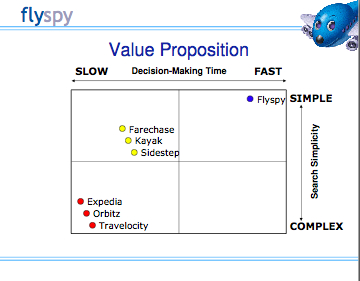
Robert Metcalf, Founder of Flyspy, speaking of his innovation: “It’s one search, one chart, with a Google-like interface.”
Phil Wolf, CEO of PhocusWright: “Web 2.0 will bring complete transparency in data and pricing — which is code for ‘truth’.”
A Note About Event Logistics
I’ve covered a lot of great conferences in my day, but I must say I’ve never been to one where the back of the ballroom was open to the exhibit showfloor…which also incorporated what was called “cafe seating.” [See accompanying diagram.] It was a wrinkle that was totally new to me. It was bothersome at first, because noise was obviously coming in from that direction. But one seemed to eventually get used to it. 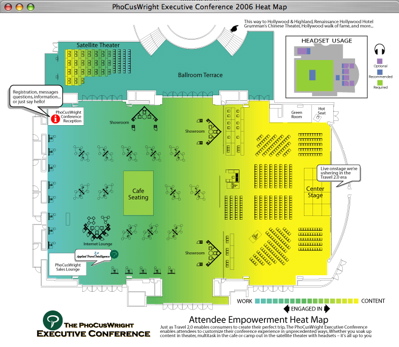 And, in its defense, it was part of a pretty ingenious logistics setup. The producers also provided headsets so you could listen to all the action while you were either sitting in the cafe seating, roaming around the exhibit flooor, or even out front in the terrace area. That area also featured a “satellite theater” with a large-screen TV to watch all the action. It included table seating, so I noticed a lot of people there were using their laptops (blogging perhaps?). I, however, much prefer my action live, and down in front, so I was forced to balance my Powerbook on my lap in the main conference room. The wi-fi throughout the entire conference area, by the way, was superb. [But a note to the expensive hotel: it wouldn’t kill you to offer it for free in your damn fancy-shmancy lobby! I had to pay for the roaming version of T-Mobile wi-fi there, which seems stupid.]
Now for some other bitches about the conference logistics:
• Table seating should have been available in the ballroom, too! At least in the front third or so. [I don’t think I’ve ever been to a conference that didn’t have that.]
• And the moderators talking from the aisles was very weird, necessitating bright lights on them all the time — which was really, really bothersome to those of us in the audience in the first 6 or 8 rows, especially close the aisles, whether we were trying to just take notes or blog live.
• The name tags, while two-sided (great idea!), had type that was too small.
• And the signage when you first got to the event was pretty bad — I’ve never had so much trouble figuring out where to go at an event (though that may been as much the hotel’s signage as anything else….very weird layout at this place).
• The reception on the first evening was way too many people (900!) in one space! (A restaurant on the second floor.) We could barely move! I wondered in retropspect why it wasn’t held in the great pool terrace area, where we had lunch each of the following two days, which was great! Under beautiful, sunny Southern California skies….

Regarding the conference sessions themselves: the opening speech from PhocusWright was waaay too long. I could just hear people collectively thinking: “Okay, let’s get this party started!” And the choice of a panel of Wall Street analysts to open the event was a real yawner.
But this is just my attempt at providing constructive feedback (I saw no comment sheets to do this). Overall, I thought it was a very well run and very valuable conference — and it ran on-time like no event I can remember! I would recommend it to anyone involved in any way in the travel industry … which will undoubtedly continue be an exciting place to be for quite some time to come.
Some of the Great People I Met at the Conference
One of the frustrating things about blogging live at conferences is that it just doesn’t leave as much time as I’d like to meet people. That, plus the fact that one’s success in finding specific people in any crowd goes down drastically as the size of that crowd increases (and in this case, it was a very big number as most conferences go). Nonetheless, I did meet an interesting cross-section of attendees. Most of these were new to me, though a few were previous acquaintances I enjoyed hooking up with again. They’re listed here alphabetically by last name:
– Par Arvidsson, CEO, Wcities Inc., San Francisco
– Christina Brzica, Director of Marketing, RealTravel, Los Altos, CA
– Michael Cayley, VP Operations, PlanetEye, Toronto
– Carolyn Cora, VP Professional Services, Vistrio, Sausalito, CA
– Rod Cuthbert, CEO, Viator, San Francisco and Sydney
– Nelson Granados, Assoc Professor, Pepperdine University, Malibu and Irvine
– Richard Keehaver, VP eCommerce & Travel, Intent MediaWorks, Reno, NV
– Jim Kolleger, Managing Partner, Genesys Partners, New York City
– Eric Kung, CEO, ShowHotel, El Monte, CA
– Kais Makhlouf, VP Client Relations, Nurun, Montreal
– Matt McIlwain, Partner, Madrona Venture Group, Seattle
– Scott Moorhead, Wotif.com, Brisbane, Australia
– Robert Metcalf, Founder, Flyspy.com
– Andy Packard, Director Business Development, LocalMatters, Denver, CO
– Drew Patterson, VP Marketing, Kayak.com, Norwalk, CT
– Josh Steinitz, Founder/CEO, The Nile Project, San Francisco
– Russell Winter, VP Business Development, SideStep, Santa Clara, CA
Great to see all of you, and do stay in touch! Travel 2.0 is definitely going to remain on my industry focus list….
Tags: online travel, PhocusWright, Travel 2.0, Web 2.0, metasearch travel sites, community travel sites
 It’s a project, I learned, that Gary’s been actively engaged in for about two years now. Gorgeous, striking work…as you can see.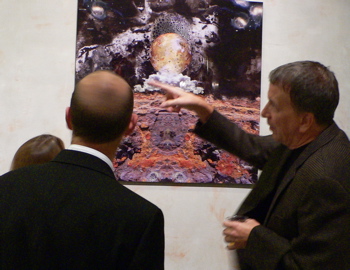




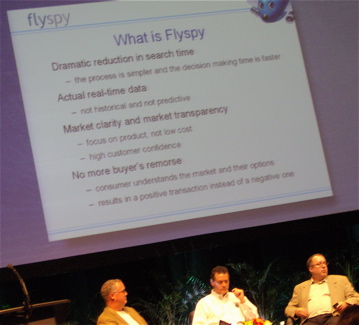 Robert Metcalf, the founder and visionary behind chart-based Flyspy, was invited a few weeks ago by the event’s producers to introduce his service at this high-profile annual gathering of online and traditional travel execs. He told me he had to think about it for a while, but ultimately decided, even though it’s still early (the site isn’t quite in full beta release yet), that it was just too tempting an opportunity to miss — to get the kind of reaction he could get here.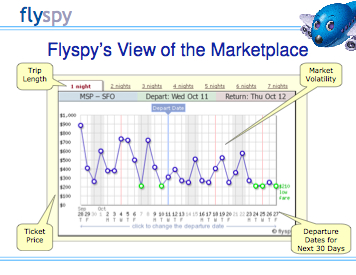
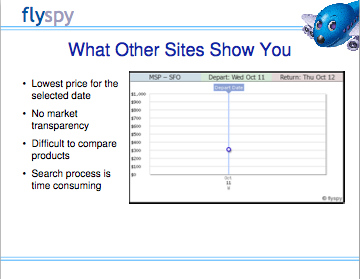
 How can one not be enthusiastic after reading this update I received a few days ago from the event producers?
  except via my own personal experiences as an avid user of these services for my frequent personal and business travel. I’m especially looking forward to the talk to be given by Rob Metcalf, founder of Minneapolis-based
  Angel investors are banding into networks at an increasing rate, especially in the Upper Midwest, and they’re getting a lot more savvy, I learned at a conference sponsored by
  They appear to be out in front of a trend, meeting the market need to fill the infamous “gap” between very early-stage funding and traditional VC funding. It’s a gap many entrepreneurs have been more than frustrated with in recent years as they attempt to attract capital to get their ventures off the ground. And it’s the angels — increasingly smart bands of these angels — that are stepping up to fill that gap.
 Miller said that Midwest Wireless began in 1990 with a handful of employees and a single tower in New Ulm, MN [one of my favorite towns, where the oldest brewery in the state, Schell’s Beer, still flourishes]. By the end of the ’90s, the company had 4700 towers. It made its first acquisition in 1996, a wireless company in Rochester, MN. By the year 2000, it had 234 employees and 110,000 customers and made another acquisition — this one for $165M — which expanded the company’s service area into Iowa and Western Wisconsin. By 2003, Midwest Wireless made a big bet: it switched over to CDMA technology, which Miller implied was a big challenge for the fledgling firm, but one they survived. By the end of 2003, his firm had grown to 507 employees and 356,000 customers, revenues had expanded to $179M, and it had made a second Iowa acquisition by the end of that year. Fast forward to the end of 2005, when the company had reached 636 employees and 440,000 customers, and $264M in revenues.
Recent Comments